Fearless Discipleship

a sermon on Matthew 10:24-39

So, my sermon title for today is “Fearless Discipleship.” I’m guessing most of you don’t ever think about how sermon titles work, but in order for our colleagues to create the online bulletin each week without pulling it all together at the very last minute, the pastor who’s preaching has to submit a sermon title pretty early on. Pastor Ben & Pastor Leland might be more on top of this than I am, but I often end up submitting a sermon title based on just my first readings of the text, before I’ve even drafted out what the sermon’s actually going to say. Which means that I didn’t realize until I sat down to write this sermon how ironic the title would turn out to be. Because after a week of praying through this gospel text, I find myself feeling pretty afraid to preach the message God has placed on my heart.

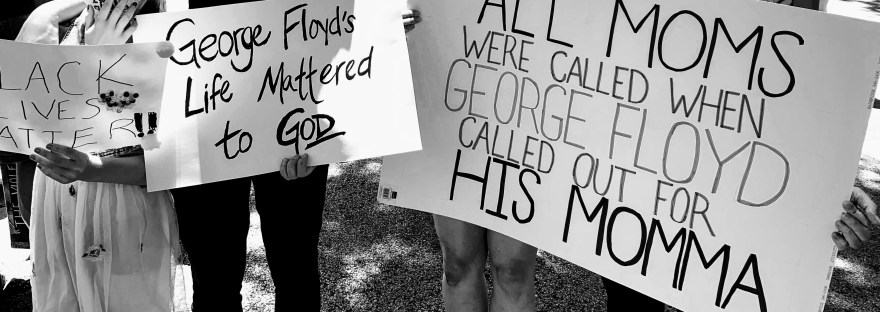
I didn’t choose this text today from Matthew’s gospel. It’s the assigned text from the Revised Common Lectionary, which is the cycle of Bible readings that mainline churches the world over use each week. This text chose us, and it’s a hard one. It’s a text about slaves and masters. It’s about truth-telling and terrifyingly bold proclamation. It’s about persecution and divided families. It’s about Jesus’ difficult words that he didn’t come to bring peace, but a sword. This text chose us on the weekend of Juneteenth, the day when we commemorate the final end of slavery in this country. And this text chose us in the continued unfolding of an uprising and an awakening around race in this country, the likes and scale of which we have not seen in a very long time. This text chose us because it is a word for our time, and God had some pretty clear things to say to me about how it should preach.

But as I sat down to write this sermon I remembered how the last sermon I preached, which was about our Trinitarian God of relationship, also talked a whole lot about race. And I remembered how two of my last three video messages to you touched on race, and about how 80 or so of us are going to be talking about race all summer as we study the book Waking Up White. And I remember acutely, every single day, that COVID and social distancing means we don’t know each other well yet; that we don’t yet have the kind of pastoral relationship that helps you feel confident in my deep love for you even when the Bible asks us to wrestle together with a word we might rather not hear. And suddenly I wanted to throw out that “Fearless Discipleship” sermon title and instead preach a feel-good message on the Psalm or something.

But then a trusted colleague gently reminded me that I’m a white pastor, serving a mostly white congregation in the whitest denomination in the country, and that my strong desire to back off this difficult text and preach a feel-good sermon is the very definition of the privilege that I carry in the world as a person who is white. It’s the privilege of getting to decide when we talk about these issues and when we’d rather just not; the privilege of getting to decide when we engage and when we just need a break; the privilege of thinking that preaching about issues of race in a time like this is a choice and not a gospel mandate. And I had to come to terms with the fact that I really wanted to invoke that privilege today. Because I mean, good grief, we’ve been talking about race for weeks now. And also we’re still in the middle of a pandemic, and we’re all tired and mostly at the end of our ropes. And also I am afraid. I’m afraid to bring up race again because I’m afraid of inadvertently become a preacher whose parishioners can no longer hear her.

But I’m even more afraid of becoming a preacher who isn’t faithful to the gospel. I’m even more afraid of becoming a preacher who is presented with a hard text and chooses to say, “Sorry, God; this is too much for us this week” instead of modeling for you the courage to wrestle with it.

So here we are.

The 10th chapter of Matthew is sometimes called Jesus’ “mission discourse.” It’s all about Jesus sending the 12 disciples into the world to proclaim God’s coming reign. And this sending? It’s no joke. Jesus sends those disciples out in complete vulnerability. They’re to take no pay, no extra clothes, no staff for protection, not even an extra pair of sandals. He grants them remarkable powers; powers that flow from God and allow them to heal people from every kind of suffering; to cast out the demonic forces that destroy people’s lives; to cleanse lepers and restore the outcast ones back into community; even to raise the dead.

But Jesus knows that this kind of faithful proclamation and practice of the gospel will put the disciples on a crash course with the powers of this world. He knows that the gospel is disclosive in nature; that it brings into the light the kinds of things that powers and principalities would rather keep hidden. “For nothing is covered up that will not be uncovered,” Jesus says, “and nothing secret that will not become known.” In order to bring hope and healing to those who are beaten down, vulnerable, discriminated against, and marginalized, the gospel’s saving power must also uncover and bring into the light the death-dealing kind of power that defies God. The kind of power that builds racial violence right into the systems of our life together. The kind of power that fills its lungs with the breath it chokes out of others. The kind of power that divides with lies and fuels itself with threats of force. The kind of power that does whatever it can, to take what it can, from anyone it can.

Jesus knows how the world works, and he knows what the disciples will encounter in their mission to proclaim God’s reign through word and deed. And so he pulls no punches in telling them what they can expect as they shout God’s power from the housetops; God’s power which stands in direct opposition to those who are invested in the death-dealing powers I just described. It’s so intense that the lectionary actually skips over some of the harshest parts, perhaps rightly assuming it might be a little too much for us to handle. Jesus tells the twelve that, because of their practice of the gospel, they’ll be handed over to powerful religious authorities and publicly beaten. He tells them that they’ll be dragged before governors and kings on account of their ministry. He tells them that their families will rise up against them – that members of the same household will betray each other even to the point of death. He tells them that they’ll be subject to persecution and hatred by pretty much everyone as they carry out God’s mission. It’s astonishing to me that the disciples said “yes” to being sent out, because in the going they risked literally everything.

But friends, it’s not just those first twelve that Jesus calls into a risky life of discipleship. He’s also called you; and he’s called me too. I trust that you have experienced the deep comfort and peace that comes through following Jesus. But a life of discipleship is not only a source of comfort and peace. It can also be a source of deep conviction and challenge. Today’s gospel text is more about the latter, even if I kind of wish it wasn’t. It reminds us that following Jesus involves helping to uncover the things that abusive powers want to keep hidden. It involves holding up the gospel like a mirror for ourselves and for the world so that it can reflect back to us the truth of who we are.

And facing that truth can be difficult. It can be downright terrifying. Because this kind of uncovering, this kind of truth-telling, will require us to face some things we might not want to face. It will ask us to do some deep, internal work of the sort that makes us feel tired just thinking about it. It will ask us to re-examine some of our most deeply-held beliefs and assumptions. It might result in the end of relationships we once held dear. It might call us to speak out in ways that are new for us and make us pretty uncomfortable. And all of that, frankly, is more than a little scary. But it’s a whole lot harder for Jesus’ saving power to heal what is kept hidden and so in spite of the personal and public risks, Jesus keeps calling us together and sending us out…calling us together and sending us out…to join in the holy and difficult work of uncovering all that hinders God’s loving and freeing purpose for the world.

I think Jesus knew that fear can be paralyzing. And I think he knew that a paralyzed people are ineffective messengers of the gospel of life. So even as he is telling the disciples – and us – about how a life in service to God’s mission will sometimes be difficult, he also tells us not to be afraid. In fact, he says it three times in just these few verses we read today. Have no fear of them. Do not fear. Do not be afraid.

But how do we live into Jesus’ call to fearless discipleship when everything around us and inside us feels so chaotic and hard to grab hold of? It might be different for you, but the thing that helps me cast aside fear and engage the work of the gospel is the reminder of just how much God adores us; of just how valuable we are in the eyes of God. Not even a sparrow can fall from the sky without God taking notice, and if God pays that much attention to little bitty sparrows, how much more does God pay attention to us…to our fears and our hopes and our needs and our dreams. The Bible tells us that our lives matter so deeply to God that even the hairs of our heads are all counted. I love that image so much. It makes me think of what it felt like as a child when a grownup who loved me would come into my bedroom at night before they went to sleep, just to lay a gentle hand on my head one more time before morning.

That’s the way that God loves you, dear ones.

May you experience that deep, deep love in your bones this week. May you feel the fiercely protective, gentle hand of God upon your blessed heads as we move through these days. And may it strengthen and embolden you with a spirit of fearlessness as you carry the gospel of Jesus into the world. Amen.
The Poetic Mystery of God

a sermon for Trinity Sunday

Today is Trinity Sunday, the day in the liturgical calendar when we celebrate the Christian doctrine of, well, the Trinity – the three persons of God – Father, Son, & Holy Spirit – who are somehow also one God.

It might be an understatement to say that the doctrine of the Trinity is a mystery. But it’s not a mystery in the Scooby Doo show kind of way; you know, where Shaggy and Fred and Velma and Daphne and Scooby ride around in the Mystery Machine, following a series of clues to solve the thing. Rather, the Trinity is a mystery in the way that good poetry is mystery. In poetry, phrases mingle and bounce over one another to communicate something deeper, something more profound, something beyond the literal meaning of the words themselves.

You already know about my nerdy appreciation for the liturgical calendar, so let me tell you why I appreciate Trinity Sunday. It’s because the poetic mystery of the Trinity tells us about the nature of God. We believe in one God, but God’s one-ness is revealed in the beautiful, interwoven, inextricable connection among three persons. To put it another way, the doctrine of the Trinity tells us that relationship is at the very core of God’s being. God IS relationship. God’s deepest essence is expressed in the community of the Three-in-One. And the mission, or work, of our Trinitarian God flows out of the poetry of that relationship.

Church, I’ve been doing a lot of thinking and praying about relationship lately. In particular, I’ve been thinking and praying about how different it has been to try and develop a relationship with you in these first few months of our ministry together. We only know each other by video. I have a deep sense that I’m speaking to you when I preach or when I record a Wednesday video message for you, but I can’t see you on the other side of the camera. I can’t see in the moment how you’re receiving what I’m sharing; how things are landing for you. I know a whole lot about the human condition generally, but I don’t really know you. I don’t yet know your stories or your families or your fears or your hopes.

And you don’t really know me, beyond whatever opinion you’ve formed through these various virtual platforms. Though I hate it as much as you do, it is good and right that we continue to protect each other and our neighbors by remaining apart. But the physical distance just means it’s also really hard to develop any texture to our relationships, you know? I’m reduced to pixels on a screen or words in a newsletter as you search for clues that will tell you whether I’m trustworthy, whether I can relate to your experiences of God and of the world, whether I can be counted on to love you faithfully.

It strikes me that our situation isn’t, in some ways, so unlike the ways relationships unfold – or maybe better put, don’t unfold – in our country, especially between communities of different races. We are members of a congregation that is part of the whitest denomination in the United States. We live in one of the most racially segregated cities in the country. What many of us know about communities that are home mostly to people of races different from our own is often only by video…24-hour cable news feeds or viral social media clips and the like. Sure, lots of us have friends or colleagues or acquaintances who are of a race different than our own. Some of us have families that are mixed-race. But most of us aren’t regularly immersed in the community life of those from whom we are different. We don’t know each other’s stories, or families, or fears, or hopes. We don’t know each other beyond whatever opinions we’ve formed from external, secondary sources that find their ways into our own largely insulated, echo-chamber-y lives.  

Our brother, George Floyd, was killed a couple of weeks ago over a $20 bill. In the wake of his death our country has erupted into demonstrations and protests and acts of peaceful civil disobedience the likes of which many of us have not seen in our lifetimes. Unfortunately, looting and destruction of property have accompanied some of those protests, igniting yet one more set of polarizing conversations in an already-excruciatingly polarized country. Depending on where we sit, we are angry, or scared, or anguished, or hopeful, or ambivalent, or maybe all of those things at once. Whether we wanted it or not; whether we were ready for it or not; we’ve been thrust into a national conversation about race; about the ways that the systems and structures of our country have been set up to benefit some people at the profound expense of others. And we’re trying to have that national conversation without any real base in the kind of poetic relationship we see in the Trinitarian God of love, of peace, of justice, of salvation.   

And now I’m trying to have it with you, and I’m trying to encourage us to have it with one another, without any real base in the kind of poetic relationship reflected in our Trinitarian God. I’ll be honest, friends. It’s a little scary. There are those who would say a pastor shouldn’t preach about anything that can possibly be construed as political, and certainly not just weeks after having started in ministry together. Because really, there’s no way for you to possibly know yet how much I already love you; how much I yearn to know the foundational stories of your lives and how those stories have shaped your faith and your worldviews. And I know that there’s a whole diversity of worldviews represented in our congregation. We’re not of one mind on probably anything, really, and that’s okay. That might make it a little scarier to talk about hard stuff, but it doesn’t mean we shouldn’t do it. Not for the sake of “being political,” but for the sake of our souls.

Relationship is God’s essence, and so when the relationships among God’s people are fractured, when beloved children of God are being killed, when some of God’s people are screaming out in grief and pain, that’s not about politics. That’s about our faith. It’s about our faith in the God of Moses and Miriam and Aaron, who led the people out of slavery and into freedom. It’s about our faith in the God of the prophets, who remind us what God requires: that we do justice, love kindness, and walk humbly with God. It’s about our faith in Jesus, who showed us that we can’t love God without also actively loving our neighbor.

In my weekly video message that goes out on our Wednesday e-mail listserv, I invited those of us who are white into a congregation-wide conversation based on the book Waking Up White, And Finding Myself in the Story of Race. In that invitation I reflected on how most of us who are white have never learned how to talk about race; about how learning to talk about race is a matter of life and death for God’s beloved people; and about my absolute confidence that we can approach these conversations in an open-hearted, grace-filled, non-judgmental way.

Learning how to talk about race is, for most of us who are white, like learning a new language. And so we’re going to be awkward together. We’re going to make mistakes together. We’re going to ask questions together and maybe feel a little scared or a little vulnerable together. Our prayer is that, by the end of the summer, about 100 people at Grace will have joined this conversation. I trust that these conversations will be faithful first steps in allowing those of us who are white to more fully uncover and understand our own stories of race so that we can more deeply understand the stories of others. And learning to understand the stories of others might give us one small foothold to join the Great Healer in restoring health to our collective brokenness. Please reach out to me or a member of the staff if you’d like to know more about what these conversations might be like and how to join a group.  

Did I mention that this feels a little scary as your new pastor? But I know we’re up to it, and here’s how I know: it’s because we were made in the image of the poetic, relational God who we celebrate on this Trinity Sunday. The Genesis story that was so beautifully presented by some of our families reminds us that we were formed from the dust of the earth – the black earth, the brown earth, the white earth, the yellow earth, the red earth.* The Three-in-One God whose very essence is relationship breathed life into the dust of the earth and said, “you are like me – made for relationship, created for community. When you forget who you are; when you forget that you belong to each other, look to me and remember.

I am the Father, who called all things into being and still calls them good.

I am the Son, who became one of you and died out of deepest love.

I am the Holy Spirit, who sets your tongues ablaze to speak courageous blessings into this broken world.

I am your God.

You were made for this.

Do not be afraid.”

* This phrasing was inspired by the poem “Remember,” by Joy Harjo, US Poet Laureate and member of the Mvskoke Nation.

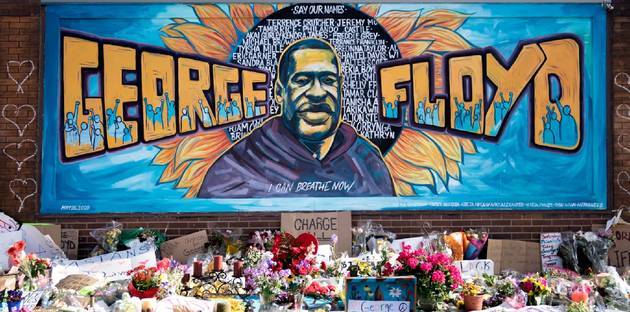
The mural in the headline photo was painted by Greta McLain, Xena Goldman, and Cadex Herrera at the site where George Floyd was killed.

The Day I Got Cussed Out in the Park: A Reflection on Whiteness in the Wake of the George Floyd Murder

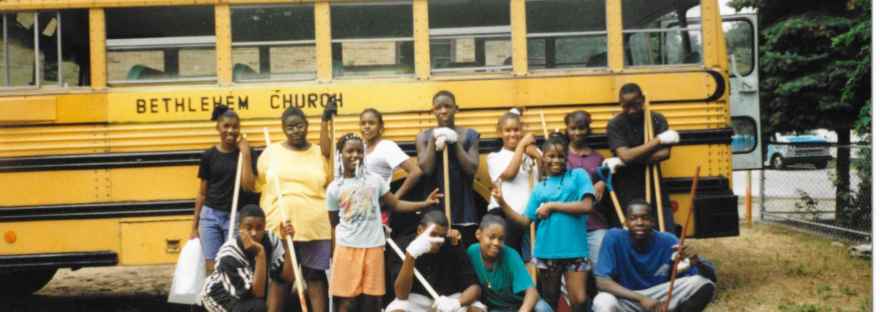
I was 20 years old on the day that Ms. Bell cussed me out in front of everybody, right there in the middle of the sweltering, littered park. Ms. Bell was the director of the Summer Youth Employment Project, a ministry of the mostly-Black Bethlehem Lutheran Church in Muskegon Heights, Michigan. I was the youth director at Bethlehem that summer thanks to a partnership between Bethlehem and my home congregation, an entirely White church in the small North Dakota town where I grew up.

Ms. Bell and I – together with Mr. Lewis – were in the park that day supervising the 20 or so Black teens who had found work and a sense of purpose in the Summer Youth Employment Project. As they raked and bagged trash and hurled jokes at each other, a White man with a steno pad walked through the park gate and approached me with a smile. He introduced himself as a local newspaper reporter, asking if he could interview me about the Summer Youth Employment Project and the kids whom the project engaged. “Of course!” I said with pride as I began to answer his questions.

The interview didn’t last long. The reporter was already leaving by the time Ms. Bell crossed the park. She was full-on yelling by the time she reached me. Her cussing hit me like a slap in the face as she asked me who in the hell I thought I was, how in God’s name I thought I could speak for her when she was the director of the program, and why the eff I didn’t have the good sense to send the reporter over to her when he arrived.

I was humiliated. And I deserved every word of the tongue-lashing Ms. Bell gave me that day.

I am White, and I had spent my entire life up until that summer in communities that were almost entirely White. In so many ways, I was wholly unprepared to face the racism that I didn’t even know was within me. I had no tools to analyze the ways that White supremacy culture functioned around me, and how I was complicit in it. Thank God, then, for Ms. Bell, who loved me enough to cuss me out for my dangerous ignorance, for my failure to recognize what it meant that a White news reporter automatically assumed that I – the only other White person in the park that day – must be in charge of all the Black folks working there.

That episode in the park was neither the first nor the last time I was forced to reckon with my own Whiteness that summer. Twenty-two years later, I’m still reckoning with it. Facing the ways that White supremacy culture continues to show up in my personal, professional, and civic life is hard. It is painful. It is embarrassing. It is scary. It is confusing. It is vulnerable.

It is also necessary.

George Floyd – an unarmed Black man – was murdered by a White police officer in Minneapolis, MN on Monday. Righteous anger over his death has spilled out in protests engulfing Minneapolis and other cities around the country. Race-based violence has snuffed out the lives of too many of our Black siblings. Ahmaud Arbery. Breonna Taylor. Sean Reed. Eric Garner. Philando Castile. Tamir Rice. Trayvon Martin. Sandra Bland. Michael Brown. Oscar Grant. Walter Scott. The list of Black lives lost is as gruesomely endless as the history of White supremacy in this country.

I sometimes hear other White people suggest that we are not responsible for this history. We did not create the systems of slavery and segregation and Jim Crow laws and redlining and other forms of institutional racism upon which this country was built. Those systems were created a long time ago. Most of us who are White never see the effects of these systems up close, and so we have the luxury of not really thinking about them. We have the privilege of looking at the problems as too overwhelming to fix. When these racist systems result in the death of yet one more Black person, we are paralyzed at best. We don’t know how to do anything beyond shaking our heads or sharing a headline on social media.

In her book Thinking About God, German liberation theologian Dorothee Soelle looks through theological lenses at a post-Holocaust, post-Cold War, growing-Third World crisis world. In considering the challenges facing God’s people and, indeed, the entire creation, she finally comes to this conclusion: “I am responsible for the house I did not build, but in which I live.”

I am responsible for the house I did not build, but in which I live.

My White siblings, this house in which we live is killing our Black neighbors. We must find the courage to take responsibility for it. We must encourage in one another the kind of vulnerability that opens us to learning what our Whiteness means and how it functions in the world. We must develop the kind of resiliency that will allow us to challenge one another in love – not to heap unproductive guilt on ourselves or on each other, but to see and to understand that our identities as White people are not neutral. We cannot change what we cannot see. Let us, together, learn how to see.

It is literally a matter of life and death.

Resources to begin:
“White Privilege: Unpacking the Invisible Knapsack” is a classic essay which includes an eye-opening list of seemingly benign ways that White privilege shows up in everyday life.

“Why Talk About Whiteness” is a brief, helpful introduction to exploring White culture. The article includes links to several essays and books for further reading.

The Whiteness Project is an interactive investigation into how people who identify as White, or partially White, understand and experience their race.