The Poetic Mystery of God

a sermon for Trinity Sunday

Today is Trinity Sunday, the day in the liturgical calendar when we celebrate the Christian doctrine of, well, the Trinity – the three persons of God – Father, Son, & Holy Spirit – who are somehow also one God.

It might be an understatement to say that the doctrine of the Trinity is a mystery. But it’s not a mystery in the Scooby Doo show kind of way; you know, where Shaggy and Fred and Velma and Daphne and Scooby ride around in the Mystery Machine, following a series of clues to solve the thing. Rather, the Trinity is a mystery in the way that good poetry is mystery. In poetry, phrases mingle and bounce over one another to communicate something deeper, something more profound, something beyond the literal meaning of the words themselves.

You already know about my nerdy appreciation for the liturgical calendar, so let me tell you why I appreciate Trinity Sunday. It’s because the poetic mystery of the Trinity tells us about the nature of God. We believe in one God, but God’s one-ness is revealed in the beautiful, interwoven, inextricable connection among three persons. To put it another way, the doctrine of the Trinity tells us that relationship is at the very core of God’s being. God IS relationship. God’s deepest essence is expressed in the community of the Three-in-One. And the mission, or work, of our Trinitarian God flows out of the poetry of that relationship.

Church, I’ve been doing a lot of thinking and praying about relationship lately. In particular, I’ve been thinking and praying about how different it has been to try and develop a relationship with you in these first few months of our ministry together. We only know each other by video. I have a deep sense that I’m speaking to you when I preach or when I record a Wednesday video message for you, but I can’t see you on the other side of the camera. I can’t see in the moment how you’re receiving what I’m sharing; how things are landing for you. I know a whole lot about the human condition generally, but I don’t really know you. I don’t yet know your stories or your families or your fears or your hopes.

And you don’t really know me, beyond whatever opinion you’ve formed through these various virtual platforms. Though I hate it as much as you do, it is good and right that we continue to protect each other and our neighbors by remaining apart. But the physical distance just means it’s also really hard to develop any texture to our relationships, you know? I’m reduced to pixels on a screen or words in a newsletter as you search for clues that will tell you whether I’m trustworthy, whether I can relate to your experiences of God and of the world, whether I can be counted on to love you faithfully.

It strikes me that our situation isn’t, in some ways, so unlike the ways relationships unfold – or maybe better put, don’t unfold – in our country, especially between communities of different races. We are members of a congregation that is part of the whitest denomination in the United States. We live in one of the most racially segregated cities in the country. What many of us know about communities that are home mostly to people of races different from our own is often only by video…24-hour cable news feeds or viral social media clips and the like. Sure, lots of us have friends or colleagues or acquaintances who are of a race different than our own. Some of us have families that are mixed-race. But most of us aren’t regularly immersed in the community life of those from whom we are different. We don’t know each other’s stories, or families, or fears, or hopes. We don’t know each other beyond whatever opinions we’ve formed from external, secondary sources that find their ways into our own largely insulated, echo-chamber-y lives.  

Our brother, George Floyd, was killed a couple of weeks ago over a $20 bill. In the wake of his death our country has erupted into demonstrations and protests and acts of peaceful civil disobedience the likes of which many of us have not seen in our lifetimes. Unfortunately, looting and destruction of property have accompanied some of those protests, igniting yet one more set of polarizing conversations in an already-excruciatingly polarized country. Depending on where we sit, we are angry, or scared, or anguished, or hopeful, or ambivalent, or maybe all of those things at once. Whether we wanted it or not; whether we were ready for it or not; we’ve been thrust into a national conversation about race; about the ways that the systems and structures of our country have been set up to benefit some people at the profound expense of others. And we’re trying to have that national conversation without any real base in the kind of poetic relationship we see in the Trinitarian God of love, of peace, of justice, of salvation.   

And now I’m trying to have it with you, and I’m trying to encourage us to have it with one another, without any real base in the kind of poetic relationship reflected in our Trinitarian God. I’ll be honest, friends. It’s a little scary. There are those who would say a pastor shouldn’t preach about anything that can possibly be construed as political, and certainly not just weeks after having started in ministry together. Because really, there’s no way for you to possibly know yet how much I already love you; how much I yearn to know the foundational stories of your lives and how those stories have shaped your faith and your worldviews. And I know that there’s a whole diversity of worldviews represented in our congregation. We’re not of one mind on probably anything, really, and that’s okay. That might make it a little scarier to talk about hard stuff, but it doesn’t mean we shouldn’t do it. Not for the sake of “being political,” but for the sake of our souls.

Relationship is God’s essence, and so when the relationships among God’s people are fractured, when beloved children of God are being killed, when some of God’s people are screaming out in grief and pain, that’s not about politics. That’s about our faith. It’s about our faith in the God of Moses and Miriam and Aaron, who led the people out of slavery and into freedom. It’s about our faith in the God of the prophets, who remind us what God requires: that we do justice, love kindness, and walk humbly with God. It’s about our faith in Jesus, who showed us that we can’t love God without also actively loving our neighbor.

In my weekly video message that goes out on our Wednesday e-mail listserv, I invited those of us who are white into a congregation-wide conversation based on the book Waking Up White, And Finding Myself in the Story of Race. In that invitation I reflected on how most of us who are white have never learned how to talk about race; about how learning to talk about race is a matter of life and death for God’s beloved people; and about my absolute confidence that we can approach these conversations in an open-hearted, grace-filled, non-judgmental way.

Learning how to talk about race is, for most of us who are white, like learning a new language. And so we’re going to be awkward together. We’re going to make mistakes together. We’re going to ask questions together and maybe feel a little scared or a little vulnerable together. Our prayer is that, by the end of the summer, about 100 people at Grace will have joined this conversation. I trust that these conversations will be faithful first steps in allowing those of us who are white to more fully uncover and understand our own stories of race so that we can more deeply understand the stories of others. And learning to understand the stories of others might give us one small foothold to join the Great Healer in restoring health to our collective brokenness. Please reach out to me or a member of the staff if you’d like to know more about what these conversations might be like and how to join a group.  

Did I mention that this feels a little scary as your new pastor? But I know we’re up to it, and here’s how I know: it’s because we were made in the image of the poetic, relational God who we celebrate on this Trinity Sunday. The Genesis story that was so beautifully presented by some of our families reminds us that we were formed from the dust of the earth – the black earth, the brown earth, the white earth, the yellow earth, the red earth.* The Three-in-One God whose very essence is relationship breathed life into the dust of the earth and said, “you are like me – made for relationship, created for community. When you forget who you are; when you forget that you belong to each other, look to me and remember.

I am the Father, who called all things into being and still calls them good.

I am the Son, who became one of you and died out of deepest love.

I am the Holy Spirit, who sets your tongues ablaze to speak courageous blessings into this broken world.

I am your God.

You were made for this.

Do not be afraid.”

* This phrasing was inspired by the poem “Remember,” by Joy Harjo, US Poet Laureate and member of the Mvskoke Nation.

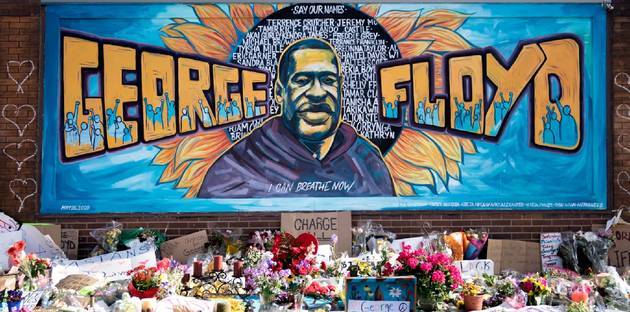
The mural in the headline photo was painted by Greta McLain, Xena Goldman, and Cadex Herrera at the site where George Floyd was killed.
The Day I Got Cussed Out in the Park: A Reflection on Whiteness in the Wake of the George Floyd Murder

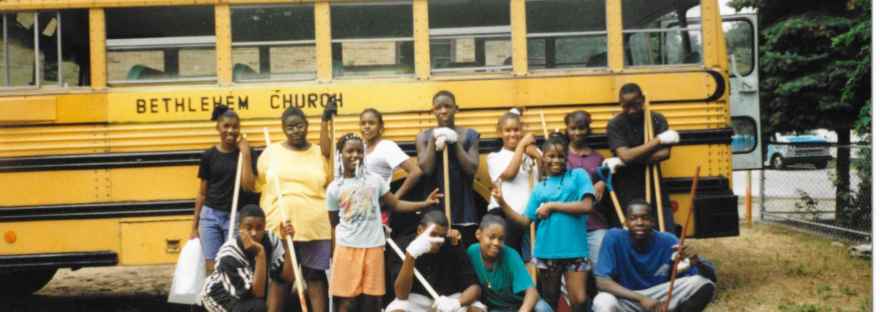
I was 20 years old on the day that Ms. Bell cussed me out in front of everybody, right there in the middle of the sweltering, littered park. Ms. Bell was the director of the Summer Youth Employment Project, a ministry of the mostly-Black Bethlehem Lutheran Church in Muskegon Heights, Michigan. I was the youth director at Bethlehem that summer thanks to a partnership between Bethlehem and my home congregation, an entirely White church in the small North Dakota town where I grew up.

Ms. Bell and I – together with Mr. Lewis – were in the park that day supervising the 20 or so Black teens who had found work and a sense of purpose in the Summer Youth Employment Project. As they raked and bagged trash and hurled jokes at each other, a White man with a steno pad walked through the park gate and approached me with a smile. He introduced himself as a local newspaper reporter, asking if he could interview me about the Summer Youth Employment Project and the kids whom the project engaged. “Of course!” I said with pride as I began to answer his questions.

The interview didn’t last long. The reporter was already leaving by the time Ms. Bell crossed the park. She was full-on yelling by the time she reached me. Her cussing hit me like a slap in the face as she asked me who in the hell I thought I was, how in God’s name I thought I could speak for her when she was the director of the program, and why the eff I didn’t have the good sense to send the reporter over to her when he arrived.

I was humiliated. And I deserved every word of the tongue-lashing Ms. Bell gave me that day.

I am White, and I had spent my entire life up until that summer in communities that were almost entirely White. In so many ways, I was wholly unprepared to face the racism that I didn’t even know was within me. I had no tools to analyze the ways that White supremacy culture functioned around me, and how I was complicit in it. Thank God, then, for Ms. Bell, who loved me enough to cuss me out for my dangerous ignorance, for my failure to recognize what it meant that a White news reporter automatically assumed that I – the only other White person in the park that day – must be in charge of all the Black folks working there.

That episode in the park was neither the first nor the last time I was forced to reckon with my own Whiteness that summer. Twenty-two years later, I’m still reckoning with it. Facing the ways that White supremacy culture continues to show up in my personal, professional, and civic life is hard. It is painful. It is embarrassing. It is scary. It is confusing. It is vulnerable.

It is also necessary.

George Floyd – an unarmed Black man – was murdered by a White police officer in Minneapolis, MN on Monday. Righteous anger over his death has spilled out in protests engulfing Minneapolis and other cities around the country. Race-based violence has snuffed out the lives of too many of our Black siblings. Ahmaud Arbery. Breonna Taylor. Sean Reed. Eric Garner. Philando Castile. Tamir Rice. Trayvon Martin. Sandra Bland. Michael Brown. Oscar Grant. Walter Scott. The list of Black lives lost is as gruesomely endless as the history of White supremacy in this country.

I sometimes hear other White people suggest that we are not responsible for this history. We did not create the systems of slavery and segregation and Jim Crow laws and redlining and other forms of institutional racism upon which this country was built. Those systems were created a long time ago. Most of us who are White never see the effects of these systems up close, and so we have the luxury of not really thinking about them. We have the privilege of looking at the problems as too overwhelming to fix. When these racist systems result in the death of yet one more Black person, we are paralyzed at best. We don’t know how to do anything beyond shaking our heads or sharing a headline on social media.

In her book Thinking About God, German liberation theologian Dorothee Soelle looks through theological lenses at a post-Holocaust, post-Cold War, growing-Third World crisis world. In considering the challenges facing God’s people and, indeed, the entire creation, she finally comes to this conclusion: “I am responsible for the house I did not build, but in which I live.”

I am responsible for the house I did not build, but in which I live.

My White siblings, this house in which we live is killing our Black neighbors. We must find the courage to take responsibility for it. We must encourage in one another the kind of vulnerability that opens us to learning what our Whiteness means and how it functions in the world. We must develop the kind of resiliency that will allow us to challenge one another in love – not to heap unproductive guilt on ourselves or on each other, but to see and to understand that our identities as White people are not neutral. We cannot change what we cannot see. Let us, together, learn how to see.

It is literally a matter of life and death.

Resources to begin:
“White Privilege: Unpacking the Invisible Knapsack” is a classic essay which includes an eye-opening list of seemingly benign ways that White privilege shows up in everyday life.

“Why Talk About Whiteness” is a brief, helpful introduction to exploring White culture. The article includes links to several essays and books for further reading.

The Whiteness Project is an interactive investigation into how people who identify as White, or partially White, understand and experience their race.

Yours Are the Hands

on being Christ’s body & on the rebirth of the church – a sermon for ascension sunday

This might be, like, the nerdiest church-person thing that could possibly come out of my mouth, but I actually stopped being cool somewhere around the year 2000 so I’m just going to say it anyway:

I have never been more thankful for the liturgical calendar.

If that phrase is new to you, now you know…the church keeps a calendar. But instead of moving us from May 24 to 25 to 26 and so on, the liturgical calendar moves us through the seasons and stories of our faith. The liturgical calendar takes its name from the word “liturgy,” which means “the work of the people,” and our work as God’s people begins in worship. Different colors, themes, and scriptures accompany each season of the liturgical calendar, which begins not in January but in late November or early December. Advent is the first season. The color blue comes out to accompany these 4 Sundays of waiting and anticipation which lead us into the next season – Christmas. White is the color of Christmas, signifying the purity and light of Christ. Then there are some lower-key “Time After Epiphany” Sundays, all dressed up in green, before we move into Lent, which are the 40 days the church spends in solemn preparation for the death and resurrection of Jesus, which we remember with great reverence during Holy Week. Purple is the color of Lent.

And then, come Easter Sunday, we are back to white as we celebrate life. The resurrection of Jesus is such a spectacularly powerful, hope-filled event for our lives and for the world that the church sets aside a full 50 days to celebrate it in our liturgical calendar. And toward the end of Easter, we find Ascension Day. The ascension falls exactly 40 days after Easter in our liturgical calendar. That was last Thursday, but the ascension of Jesus is such a significant event that we often observe it on the Sunday immediately following. So, we call today – the last Sunday of Easter – Ascension Sunday – the day when we hear the writer of Luke and Acts tell of Jesus’ last appearance to the disciples before returning to the heavenly parent.

So, I’ve always appreciated the way that the liturgical calendar marks the rhythms of our life together as God’s people. But I find myself even more grateful for it in the middle of this coronavirus crisis because time is doing weird things lately. I know you can relate! I often wake up in the morning not having any idea what day it is. I’m pretty sure last Friday was actually 62 hours long, and that the month of April alone included approximately 472,000 days. I don’t think I’m even fully, consciously aware of how my brain has already kind of divided the whole of life into two pieces along a coronavirus-shaped hinge. There’s life pre-COVID-19, and there’s now. The chronological time that our regular calendars mark feels all out of whack, and so I find some sense of grounding in our liturgical calendar, knowing that God’s time is somehow revealed there.

The disciples, in our reading from Acts today, were having a different kind of struggle dealing with chronological time and God’s time. Jesus had been crucified only about six weeks before the ascension in Acts. With his death came the death of the people’s hope that Jesus would be the one to overthrow Roman rule, ushering in a new reign of freedom for those who had been suffering. But then Jesus was raised, and he’d been appearing to the disciples for forty days, talking about the kingdom of God. Their chronological clocks were still ticking, and so they ask Jesus as they had many times before, “Is THIS the time when you will restore the kingdom to Israel?” Jesus tells them that their time is not God’s time, and then he blesses them. He assures them that they will receive God’s power when the Holy Spirit comes upon them. He tells them that they will be witnesses to his radical love not just in Jerusalem, but to all the ends of the earth.

And then he is lifted up on a cloud, carried away out of their sight and into heaven.

Yep. You heard me right. The person who wrote Luke and Acts tells us that Jesus was lifted up on a cloud and carried away into heaven. We’ll talk on some other day about how differently our first-century ancestors viewed the heavens and the earth, about how science isn’t actually the enemy of the Bible, and about how you don’t have to throw away your intellect in order to be a Christian. But for now, here’s the question I want us to sit with together:

What does this story mean for us? The earliest followers of the Jesus movement believed it was important for people to know that Jesus had not only been raised, but that God carried Jesus away into the heavens as he was blessing the disciples below.

Church, what does this mean for us?

St. Teresa of Avila was a 16th century Spanish nun who had an especially powerful connection to the mysteries of God. There’s a poem attributed to her that gets to the heart of the matter more beautifully than I could. She writes:

Christ has no body now but yours,
No hands, no feet on earth but yours,
Yours are the eyes through which he looks with
Compassion on this world,
Yours are the feet with which he walks to do good,
Yours are the hands with which he blesses all the world.
Yours are the hands, yours are the feet,
Yours are the eyes, you are his body.
Christ has no body now on earth but yours.

Beloved of God, when the writer of Luke and Acts tells us that Jesus ascended into the heavens, he is telling us that the power of Jesus’ love was carried not just into one specific place somewhere far away. The power of Jesus’ love was carried into the whole of the cosmos, touching everything that is with the grace of God. The power of Jesus’ love ascended not just into the heavens. It ascended into you. It ascended into me. It ascended into God’s people so that we might embody the grace, mercy, compassion, justice, gentleness, and love of God that Jesus embodied so fully while he walked this earth.

Christ has no body on earth now but ours, Church.  

The liturgical calendar is going to move us into Pentecost next week. Rushing winds and tongues of fire carry the Holy Spirit to God’s people on Pentecost, and the church is born. And it’s perfect timing. This coronavirus pandemic has changed everything we thought we knew about what it meant to be Christ’s body on earth. It’s unsettling, to say the least. My internal chronological clock is not just ticking; it’s screaming! It’s screaming to get back to the way things were. So thank God that the liturgical calendar is throwing us a bone here, giving us an opportunity to reflect not only on the birth of Christ’s church at Pentecost, but on the re-birth of Christ’s church today.

It was only 10 weeks ago that congregations like Grace were still gathering together in the same buildings. That simultaneously feels like a lifetime ago, and like it was just yesterday. Life in the church is changing almost as quickly as the news updates we hear about the virus itself. We’re tired. We’re stressed. We miss our people. Time feels out of whack and we’re confused and crabby about it…or at least, I am. So what do we do?

I think we do what God’s people have learned how to do over literally thousands of years of practice. We hold close together. Though we remain physically apart, we allow ourselves to be re-membered into the one body that we have always been, people of Grace – people of God. We allow ourselves to be re-membered into Christ’s body here on earth as we become something new for the sake of the world.

As we experience this time of rebirth:
Let us keep our eyes – which are Christ’s eyes – open for every opportunity to look with compassion on those in need.

Let us reach out our hands – which are Christ’s hands – to bless this aching world in deep and meaningful ways.

Let us root our feet – which are Christ’s feet – in needs of this present moment, trusting that the power of Jesus will guide us into our continued becoming.

Disappearing Spaces

a sermon on john 14:1-14

Texts like this one from the gospel of John can be a bit tricky for a preacher, mostly because this one is so familiar. Church people have heard it a thousand times, and a whole lot of people who aren’t so familiar with church have also heard it a bunch. For example, regular church attender or not, I’d guess that most of us have heard this text read at at least one funeral. Traditional funeral sermons on this text encourage us to imagine Jesus putting his carpentry skills to good use for us in heaven, making up a bright and shiny room for us and our loved ones to call home when our time on Earth is done. Others of us have heard this text used to influence interfaith conversations, usually by suggesting that people of other religious traditions have no place in God’s reign and most certainly will NOT be our neighbors in any of those aforementioned bright and shiny heavenly rooms. The common theme here is that most us have learned to hear these words from John and cast our thoughts away from the complexity of this earthly life and instead to look heavenward toward the glories awaiting us in our Father’s house after we die.

I gotta say, I understand the tendency. Jesus’ words are reassuring. “Do not let your hearts be troubled! In my Father’s house there are many rooms, and I’m going to prepare a place for you. And if I go and prepare a place for you, I will come back and bring you with me so that where I am, you will be also.” Part of my own weary soul breathes a tiny sigh of relief when I hear these words, because Lord knows – literally – that words of assurance are hard to come by in these days. Lord knows – literally – that its exhausting to battle our ways through the miniscule and massive challenges surrounding us every day right now. If you saw my weekly video message on Wednesday you heard me and my husband Jason talking about what a rough week it’s been around our house. Patience has been in shorter supply. Sadness and maybe even some atypical low-grade depression are more at the surface. We’ve been feeling frustrated about pretty much All The Things and also a little afraid of the long-haul nature of this COVID crisis, and of the reality that life isn’t ever going to be quite the same anymore.

I know because you’ve told me that things are feeling heavy for you, too. Loneliness is taking a new kind of toll for many of us, even for the proudest self-proclaimed introverts among us. Some of us are regular visitors to hospitals and clinics for health concerns that have nothing to do with COVID, except that they suddenly have everything to do with COVID because showing up to a hospital feels risky right now, even when it’s necessary. Some of us are separated from loved ones who are ill, or who are nearing the end of life, or who have died very recently, and the grief of all of that is just too much to bear. Some of us have lost jobs or have taken significant pay cuts or have been furloughed, and the financial stress on top of everything else is enough to almost topple us. Some of us live with depression or anxiety that might be relatively well-managed in normal times, but these aren’t normal times and our emotional health is suffering. Some of us are feeling bewildering signs that our overall wellness is just out of whack in ways that we haven’t really experienced before. And these are only the COVID-related parts of our life together. We don’t even have space to think about the climate crisis or the immigration & refugee crisis or the food insecurity crisis or, or, or…

It’s no wonder we long for words of assurance. It’s no wonder that we’d rather look toward that golden heavenly home than face the brokenness that’s both within and all around us. Like Philip in this gospel reading we, too, are apt to ask Jesus, “Alright, where is God? Show us the Mother – the Father – the Heavenly Parent – and we will be satisfied.”

Where is God? 

A close friend of mine named Jen kept a blog through a particular phase of her life. She began one memorable blog post in this way: “I have spent the last week seeing God everywhere, but principally in the disappearing spaces between people.” As I was praying over this text in preparation for this sermon, the memory of this friend’s words became gospel for me. It maybe sounds almost cruel to talk about the disappearing spaces between people as gospel when we’re in the middle of this extreme kind of physical distancing, but just stick with me here.

I have spent the last week seeing God everywhere, but principally in the disappearing spaces between people.

Church, I do think the scriptures promise us an ultimate future dwelling at the God’s side. And I confess my hope that God’s dwelling will be filled to overflowing with all kinds of surprising people – including ones of different faiths. But the promise of an other-worldly, heavenly home isn’t what stands out to me as I read John today. Instead, I hear a recounting of the disappearing spaces between people. I hear a story of relationship…a deep and intimate relationship between Jesus and his friends that is lived out not in the sweet by-and-by but in the grit and pain of an earthly existence which just hard as often as it is not.

And boy, were Jesus and his disciples in the thick of that grit and pain. This particular piece of John’s gospel unfolds on Thursday evening, the night before Jesus’ crucifixion. Jesus knows that he will soon leave this world and is trying to prepare his disciples for all that is about to take place. Just a few verses before the reading we heard today, Jesus told the disciples that one of them would soon betray him, and then he tells Peter that he will deny Jesus three times. It’s in this context that Jesus says, as we just heard, “Do not let your hearts be troubled.” Seriously, Jesus?! How could one’s heart be anything but troubled by all of this? Philip and Thomas and the others are afraid and, frankly, Jesus’ words about going to prepare a place for them, and coming back to take them with him, and reassuring them that they already know the way to the place he’s going, sound, like, actually a little bit crazy. So Thomas says it: “Jesus, we have no idea what you’re talking about. We don’t know where you’re going. We have no idea how to get there.” Jesus says, “Of course you know the way because I am the way, and the truth, and the life. If you have seen the Father, you have seen me. You HAVE seen him, and you know him.” Phillip enters the conversation with his own doubts. “Alright, Lord. SHOW us the Father and we’ll be satisfied.”

The disciples tend to get a bad rap in the gospels. They’re slow to understand and often slow to believe. But I read Thomas and Phillip’s questions and doubts not so much through a lens of thickheadedness. Instead, I see them as an illustration of the disappearing spaces between people…the disappearing spaces between them and Jesus. These disciples have walked a long road with Jesus, and Jesus is telling them that there is still a long and difficult road ahead. Their questions, to me, are an indication of the trust they have in their relationship with Jesus. That trust might not seem evident on the surface of their doubts, but somehow, their relationship with Jesus has deepened to the point where they are unafraid to be vulnerable with him, even in the midst of their fear and anxiety. A pastoral colleague of mine suggested last week that fear and anxiety, in tension with trust, is where we find the beginnings of hope. I think that’s right on.

“I’ve spent the week seeing God everywhere, but principally in the disappearing spaces between people.” This is a story about relationship. It’s about the relationship between Jesus and his friends. It’s also about the relationship between Jesus and the Father – the Mother – the Heavenly Parent. Phillip asks Jesus to show them the Father, and Jesus says, “Friends, you already know the Father because you know me. We dwell together, one within the other. There is no space at all between us. Believe that I am in the Father and the Father is in me. But if you can’t, believe because of the works themselves.” And oh, what works they have been!! The Way of Jesus, which these disciples have walked along with him, has been marked by acts of love that reveal the very face of God. Healing the sick. Raising the dead. Turning water into wine at a big ol’ party. Shedding holy tears along with his friends who were nearly destroyed with grief. Creating huge feasts for thousands of people out of simple fish and bread. Earthy, tangible works that change lives here and now, in this present moment, in this very time.

Beloved of God, these are anxious times. Here’s what I wonder. Dare we put that anxiety in tension with trust in the same Jesus who calls us just like he called those first disciples…who calls us again and again to allow the spaces between us and him to disappear…who calls us over and over into a deep and intimate relationship with himself? Dare we find hope in the midst of this anxiety? We HAVE seen God because we know Jesus. And we know Jesus through the radical ways in which he lived and loved and healed and served. We know Jesus for the ways he still shows up in the grit and pain of this earthly existence. Through his life, death, and resurrection he dissolved the spaces between us and him so that we might be freed to show a dead and dying world what resurrection looks like, feels like, smells like, and tastes like right here, right now. Yes, even in the midst of a pandemic.

You know the way to the place Jesus is going because you have already seen it. So as we gather again today around the abundant feast of bread and wine, rooted in relationship with the one who raises us from the graves of our own fears and anxieties, may we dare to live out the hope we find there. You know the way to the place Jesus is going because you have already seen it. So go! In whatever ways are safe and appropriate right now, Church, bring the hope you have come to know in Christ to the places he has first gone. Send notes of support to the sick and the suffering and to those who care for them, right down to the hospital custodians. Join the BEDS Plus meal train and provide for the hungry and the poor. Learn about Ahmaud Abery’s story and advocate on behalf of those who are victims of race-based violence in this country. Drop a care package on the porch of the neighbors you barely know, or make a gift to ELCA World Hunger in support of our neighbors across the oceans. And then notice as the spaces between God’s people begin to disappear, in spite of our physical distance.  Amen.   

Hope Marks the Road

a sermon on luke 24:13-35

I had only been in Mexico a handful of weeks on the day that I got hopelessly lost on the streets of Mexico City. I had moved there as a 27-year-old first call pastor, serving as a missionary on behalf of the ELCA. I remember feeling a comforting sense of growing confidence as I’d set out for the market that particular morning. My Spanish language skills were deepening, I knew the walk down Revolucion and past the Barranca del Muerto Metro station, which would bring me to the entrance door I wanted, and I’d been to this market enough times by now that a few of the puesteros – the vendors – recognized me and called out greetings as I walked past.

I snaked my way ever deeper into the labyrinth of the market, buying some tomatoes, some jalapenos, some eggs, and a few strawberries along the way. I was feeling SO confident by the end of my little excursion that I decided to leave the market through the back rather than the front entrance to which I was accustomed. Well, that back exit spit me out not onto a main road, but into the outdoor extension of the market. Vendors lined the narrow winding streets, selling pretty much everything you could imagine – pirated DVDs, single cigarettes out of open packs, secondhand clothing, plastic food storage containers, you name it. It only took me a few blocks before I realized I had no idea where I was anymore. So, I started to ask for directions.

Now, my Spanish had gotten way better than when I’d first landed in Mexico, but there were a number of things happening here that were decidedly not in the favor of this lost gringa. First, the street Spanish being spoken around me was peppered with all sorts of idioms and slang that I didn’t yet know how to use in my daily life. Second, lots of the street names in Mexico City come not from Spanish, but from the indigenous language of Nahuat’l, and let’s be real. My ear was not yet attuned to just catching words like “Nezahualcoytl” on the fly. So, I took a deep breath and resigned myself to the probability that I was going to be out here for awhile, and to the certainty that I was going to need to ask a new person for help approximately every block and a half.

I’d been at this game for probably 20 minutes when I came across an elderly woman, sitting on a blanket with small candies and gum spread out in front of her for sale. Her long, white hair was pulled back into a thin braid, and the thick callouses on her bare feet suggested to me that she probably didn’t own shoes. I must have looked as bewildered as I felt in that moment because she called to me from her blanket.

When I told her I was lost and gave her the general direction of where I was trying to go, she stood up carefully and, in a beautifully intimate gesture, took my face in her hands as she said to me, “Ay, mi vida, mi corazon, mi amor, yo te enseno el camino.” Ay, my life, my heart, my love, I’ll show you the way. And she did. This poor, elderly Mexican woman – whose name I’m embarrassed to say I didn’t even have the presence of mind to ask for back then – showed me all the way home that day. But she also showed me so much more. In a moment when I was feeling particularly vulnerable, she showed me the face of Jesus.

It’s amazing, isn’t it…the simple but also life-changing things that can happen to us on the road as we’re making our way through this life? Cleopas and the other disciple had some first-hand experience with the exact same kind of thing back in the day, on that 7-mile road between Jerusalem and the village of Emmaus. Things had gotten pretty dangerous in Jerusalem, especially for the followers of Jesus. Jesus, the disciples’ beloved friend and leader, the one whom they had hoped would finally liberate their people, had just been publicly executed by the Roman government. Jesus was dead, and all of their hopes for a new kind of life…a new kind of world order, even…had died along with him.

Cleopas and his friend are re-hashing all of these things as they walk the road together until a stranger comes alongside them, asking what they’re talking about. The disciples are understandably surprised that this stranger seems so clueless. Like, this thing that’s just happened in Jerusalem is trending on every social media platform, and it’s the leading headline for every news outlet, but whatever. They decide to bring the stranger up to speed.

They tell him about Jesus, a prophet who was mighty in word and deed, who had been handed over to the authorities and condemned to death. They tell him about how, because of Jesus, the people had begun to feel hope for the first time in generations. And they tell him about the women in their group, who asserted that the tomb where Jesus’ body had been laid was empty, but how none of the men had actually seen Jesus. The stranger doesn’t even need to ask how Cleopas and his friend are feeling in the wake of all these things because it’s written all over their faces. They are sad. Anguished. Heartbroken. They are most certainly also burdened by the weight of carrying all these feelings, and anxious about the uncertain future that now lies before them. Whew. Can you relate?

Before long the stranger begins to speak, opening the scriptures to the disciples starting with Moses – the great liberator of God’s people who led them out of slavery in Egypt – and continuing with the prophets, who throughout the Old Testament were consistently speaking truth to power, calling out the wealthy and elite and the rulemakers of the day for the extravagance of their lifestyles…lifestyles which served to, as the prophet Isaiah puts it, grind the faces of the poor into the dust.

It’s no accident that the stranger chooses Moses and the prophets as he talks with the disciples. It’s like the stranger is saying, “If this Jesus was who you say he was – a prophet mighty in deed who came to usher in a whole new world – how could he have met any other fate than what all the prophets faced…to lose his life at the hands of those who felt threatened by him?” Because then just as now, there were those who felt threatened…by the expansiveness of Jesus’ welcoming arms…the stubborn insistence of his love for all who were hurting and excluded…the life-altering nature of the hope that his ministry gave to the people.

As the disciples listen to the stranger something starts to move within them. When evening draws near they insist that the stranger stay with them. And then they do what we, too, do as a church community every week, and what we’ll keep doing online while we’re apart. They gather around a table. They share a meal. And in the breaking of the bread the disciples recognize the truth – that this one in their midst has never actually been a stranger…

As soon as they recognize Jesus he vanishes from their sight, but something profound has happened. “Were not our hearts burning within us as he talked with us on that road?” the disciples reflect. And immediately, they know what they have to do. Nothing has changed in Jerusalem. It’s the same chaotic, scary, and uncertain place it was when they left. Their future is no less clear to them. But somehow, the disciples have been so radically changed by their encounter with the crucified and risen Christ that they get back on that road, returning to the place they’d just left, filled anew with hope, to re-engage in the work of helping God’s reign break forth in the world.

Church, it’s no secret that we are living in extraordinary times. Our circumstances are obviously different than those of the disciples, but the road we are walking is similarly difficult. The stay-at-home order in Illinois has just been extended through May 31. We have no idea what this continued pandemic and the gradual reopening of our public spaces will mean for us, for our families, for our livelihoods, or for the church. The road ahead of us is as bewildering as the winding back roads of that Mexico City market that swallowed me up all those years ago. And like the disciples on the road to Emmaus, grief and fear and confusion can keep our eyes from seeing any hope along the way…can keep us from recognizing the face of Jesus when he shows up.

But it doesn’t matter. Truly, friends, it doesn’t matter. Because here’s the thing. It was always Jesus. Even when the disciples’ ability to recognize him was clouded by the stuff of their own difficult lives, it was always Jesus. The presence of Jesus doesn’t depend on our ability recognize him. Just like the presence of Jesus doesn’t depend on our feelings. The presence of Jesus doesn’t depend on our ability to muster up some certain kind of positivity when things seem bleak, or some false sense of hope when we feel like we’re hanging by a thread. In fact the presence of Jesus doesn’t depend on us at ALL. The presence of Jesus just IS…sure, and certain, and true, today and always. No matter what.

These are difficult days, friends, but Hope marks the road. Embodied in Jesus, Hope accompanies every step we take as we journey through life. Even when we can’t recognize it or feel it Jesus is there, showing us the way when we feel most lost. And that seems just about right. Because at the end of the day, in the company of Jesus, aren’t we all just walking each other home?

Quiet Enough to Hear

a sermon for easter sundaymatthew 28:1-10

One of my closet colleagues in the years I lived in Mexico pinned a powerful quote from Indian novelist Arundhati Roy to the wall of our office. It’s since become imprinted on my heart. “Another world is not only possible,” Roy writes, “she is on her way. On a quiet day, I can hear her breathing.”

Another world is not only possible, she is on her way. On a quiet day, I can hear her breathing.

Church, Christians are gathered in spirit around the entire globe today to claim against all odds this defining event of our faith. Christ is risen, and nothing will ever be the same. I know that Grace is accustomed to celebrating the resurrection with the beautiful, well-done, all-out liturgy and music that is so core to our congregation’s identity. My heart aches along with yours that our celebrations are so much quieter and so much simpler today. There’s no brass. There are no choirs. There are no banners, and no collective shouts of “Alleluia!” There are no kids shrieking with joy around the playground area as they hunt for Easter eggs. There’s no buzz of energy in the fellowship hall over continental breakfast. It’s hard. It hurts. And to be honest, I kind of hate it. I kind of hate that our first Easter together is unfolding in this way.

But then I remind myself of the thing I said to you a couple of weeks ago when I first started as your pastor. (If you didn’t know it already, sometimes pastors say the things that we ourselves most need to hear!) The church has never been about the buildings in which we gather. And while God loves our faithful offerings of beautiful worship, God is still God without them. So although there’s perhaps a certain sadness tingeing our celebrations today, I also wonder if maybe, just maybe, Easter might be quiet enough this year for us to hear afresh the breathing of a new world that Jesus’ resurrection ushered in, and keeps ushering in, and will keep ushering in.

Because that first Easter didn’t start with trumpets and fanfare. It started with one man, awaking by himself in a dark, stone cave, peeling off the linen cloths that Joseph of Arimithea had used to wrap his lifeless body just a few days earlier. It started with Mary Magdalene and the other Mary, sitting outside the tomb at first light in the damp cold, the dark and the chill no doubt matching the feelings they carried within them. And though Matthew’s gospel doesn’t tell us exactly where the disciples were in the days after Jesus’ crucifixion, we can take a hint from John’s telling of the story, which finds the disciples quarantined together in a locked room, fearful and uncertain.

And into the quiet, into the grief, into the fear and uncertainty, the unmistakable power of God breaks in. Of the four gospel writers, Matthew has a special penchant for drama and so he tells us of a sudden earthquake, of an angel that looked like lightning, with clothing as white as snow, and of guards who shook and then fell to the ground out of fear, their bodies suddenly as still as corpses. These things sound improbable at best to our modern ears, but they are Matthew’s way of ensuring that the first hearers of this story would know, beyond a shadow of a doubt, that what is happening here is of God. First century people well-versed in the Old Testament scriptures knew that the presence of God was signaled by natural phenomena. Wind, lightning, thunder, hail, fire, and earthquakes all carried the power and the often-terrifying mystery of God’s presence into the ancient stories of the faithful.

And this being who looks like lightning? We trust that he is of God because we’ve heard some of these phrases before, in the book of Daniel, where God is described as having clothing “as white as snow,” and where the man who appeared to Daniel had “a face like lightning.”  The Hebrew tradition taught that anyone who saw the face of God could die and so the guards’ response of paralyzing fear before this angel of the Lord seems the only sensible one. The women, however, are specifically invited into God’s presence when the angel speaks to them directly – “Do not be afraid,” he says. “I know you are looking for Jesus who was crucified. He is not here, but has been raised as he said.”

Shhh. Quiet. Can you hear her breathing?

Can you hear the wind of the Spirit’s breath filling Jesus’ lungs as he awakes from death?

Can you hear the wind of the Spirit’s breath on the lips of the women as they run to tell the disciples what they’ve seen?

Can you hear them catching their breath as they run smack into the risen Christ along the way?

And can you hear the wind of the Spirit’s breath on Jesus’ own words to his beloved friends – “do not be afraid”?

Can you hear the wind of the Spirit’s breath whispering now to a beleaguered creation…and to your own hearts…that Christ is risen, and nothing will ever be the same?

Church, can you hear a new world breathing?

It’s okay if you can’t. It’s hard for me right now, too. It’s hard to hear that new world breathing when the current one is smack in the middle of what feels like a very, very extended Good Friday. It’s been hard for me to hear the promise of new life when each day brings with it new statistics of death, and even harder still when the numbers reported on the news increasingly include the names of people we know, and sometimes even people we love. It’s hard to hear the breath of new life when the sounds of worry or stress or sadness or frustration or loneliness or exhaustion are rattling around in our brains in the low-level kind of way that makes us think it’s not that bad, I’m doing okay. Except that even these low-level rattling feelings still interrupt our sleep or our concentration or our relationships with the people we love.

It’s okay if you can’t hear a new world breathing, because here’s the thing, friends. Other people can. Today, right here, right now, others can.

And that’s why God doesn’t leave us hanging out there on our own, but instead calls us into communities of faith…communities just like Grace.

That’s why the Bible reminds us that we are part of the BODY of Christ and aren’t just lone rangers out there having to make faith appear out of the inadequately thin air of our individual lives.

That’s why, when we come around God’s table for communion, which we’ll do together in just a few minutes, we confess that Jesus is right there with us, along with all of the saints in faith who have ever lived before us.

Thanks be to God for this call into community, because if these moments of collective vulnerability we’re experiencing the world over show us anything right now, it’s the truth that we simply can’t MAKE it on our own.

That’s always true, and it’s especially true right now. We want to say “yes!” to the new world breaking forth with Jesus’ resurrection, but sometimes we need to lean on our community to believe for us when we’re having a hard time, and to trust that the strength of that community is enough to hold us when we’re struggling. Because truly, this incredible story of a God who brings live things out of dead things would be incomplete if even one of us was missing. We all play different roles in that story, and we move between roles depending on where we are in our lives on any given day.

Sometimes we’re like the guards at the tomb, paralyzed with fear in the face of all that’s unfolding before us.

Sometimes we’re like the disciples, imperfectly stumbling our way through a life with Jesus and then hiding away in shock and in fear when the risks of being associated with him become too great to bear.

Sometimes we’re like Mary Magdalene and the other Mary, sitting grief-stricken outside the tomb of the one who loved us beyond all imagining…the one who loved even the parts of us that other people laughed at, or that we felt ashamed of, or that we couldn’t love in ourselves…until the blazing presence of God hits us like a ton of bricks and turns us into witnesses, running toward our friends with a confounding mixture of fear and joy.

And sometimes we’re like the angel, absolutely radiant with God’s power as we confidently – even defiantly – proclaim a message that comes from God’s very mouth – that love is stronger than death. That goodness is stronger than evil. That in Jesus, life is stubborn…powerful enough to make her way in the world, breath by breath, against all odds.  

Christ is risen, Beloved of God. A new world is on her way. And indeed, she is already here. Listen to her breathing. Praise be to the God of Life.

No Glory, Laud, or Honor

a sermon for palm/passion sunday

There’s sort of an unwritten rule that good preachers take care to not share too much in the way of personal stories when it comes to sermons. I think this is generally a wise rule to keep in mind. But it seems like we’re in the midst of a time when most of the rules about life and ministry just don’t apply, so I decided I would go ahead and break any that might be remaining and just tell you the God-honest, vulnerable truth about where I’m at right now.

The truth is that I think I’ve cried more this week than I’ve cried in years. I mean, the tears have just been coming out all over the place. I have my family’s permission to tell you that my uncle Paul has been in very critical condition in a North Dakota hospital. He was intubated just over a week ago with what was the second confirmed case of COVID-19 in that state. He hadn’t been around anyone at all who had been sick, but the illness brought him within inches of death, and my aunt wasn’t able to be with him in the hospital. So many tears. And then, after a number of days when it wasn’t at all clear whether he was going to survive this illness, he miraculously turned a corner. And I do mean miraculously. He’s not yet out of the woods, but his medical team was able to lift him out of his coma, and he was able to say hello to my aunt on the phone just a couple of days ago. Again, so many tears.

On Tuesday, my first official day as your new pastor at Grace, I had a Zoom meeting with a small handful of the staff. As the faces of those four other colleagues showed up on the screen, I started to cry. Like, I cried an embarrassingly unprofessional amount of tears, right there in front of God and everybody as that meeting got started. I’ve grown accustomed to the overwhelming sense of joy I’ve felt in stepping into this call as your pastor, but I was wholly unprepared for the grief that hit me like a sucker punch when I saw the faces of these people I already love but with whom I cannot gather. I feel exactly the same way about each of you. I already love you, and I’ve never even seen you. So when these flowers arrived at my door on Saturday morning, together with a beautiful note from the congregation, welcoming me as your pastor, guess what happened? Yep. So. Many. Tears.

On Wednesday, a calendar reminder popped up on my phone. It said, simply, “Kate Rehearsal.” Our 7-year-old has discovered a passion and a gift for musical theater, and we’d signed her up for her first-ever musical with a really amazing community children’s theater group. Her first rehearsal was to have been this week. Somehow that calendar reminder also triggered So. Many. Tears. Tears for Kate’s loss, and tears for the many, many little losses that your families are also experiencing, which don’t actually feel so little at all.

I’ve cried more this week than I’ve cried in years. And I think, at the root of it, is the sense of powerlessness I feel in the hands of this global pandemic. I wonder if you might feel the same way. There is illness, and there is more to come. There is grief, and there is more to come. There is overwhelming loneliness and isolation. There is also, for some of us, unrelenting togetherness – houses filled with the people we love most in the world who we can also just BARELY stand to be around sometimes right now. It’s just all so much, and we’re powerless before it. Here we are, God’s people literally the whole world over, standing empty-handed and defenseless before a virus that has upended every one of our lives in the blink of an eye.

It strikes me that we’re not so unlike the crowds of people who had gathered to greet Jesus riding into Jerusalem all those years ago. They are similarly empty-handed; similarly defenseless before the forces arrayed against them. But rather than staring down a virus that’s upended their lives, they’re looking square into the temple priests’ exclusionary religious rules…the Roman officials’ oppressive laws and armies…the centurion soldiers’ threatening spears and armor. Their branches and their garments are simply no match for the powers that have upended their lives, and so the lay them on the ground and cry out to the man riding into the edge of town, whose reputation precedes him. “Hosanna! Hosanna!” they shout as a dusty, smelly donkey carries Jesus through the crowds.

Hosanna. We’re used to hearing it as a joyful shout of praise, but the Hebrew root of the word actually means “save us.” “Save us!” the crowds cry out. And on their cries is the God-honest, vulnerable truth of where the people were at on the day Jesus rides into town. Hosanna! Save us! Save us from the religious rule-makers who say we’re not worthy to enter the holy places. Save us from the crushing weight of poverty. Save us from the abuses of the empire that rules over us. Save us from our apathy. Save us from our hopelessness.

The crowd shouted “Hosanna! Save us!” and I imagine that the people in that crowd had expectations for what that salvation would look like. It would look like all the other things that seem to win in the world, except it’d be bigger, and stronger, and more effective, and more complete, because God had sent this one named Jesus. And maybe this man named Jesus would finally be enough to conquer the powerful ones who had kept the people crushed under their thumbs.

And here we are today, standing with siblings across the entire world, shouting the same cries of “Hosanna! Save us!” as our own need for salvation becomes increasingly clear to us. Save us from rising rates of infection and death. Save us from economic devastation. Save us from the loneliness and isolation, and also from the too-much-togetherness. Save us from our overwhelming anxiety. Save us from the feeling that the pressures and pains that were present in our lives before the coronavirus somehow no longer matter to anyone. Save us, Lord.

Church, here is what I know. Jesus hears the cries of “Hosanna!”. He heard the cries of the people in the crowd on that first Palm Sunday, and he hears them from us today, too. And as we enter into this Holy Week, we will witness, again and again, the salvation that Jesus brings. Except that as much as human hearts throughout history have yearned for the salvation of Jesus to come in the form of conquering might or permanent deliverance from human suffering, that’s not what we’re going to get. We rightly heap glory, laud, & honor on Jesus as he comes riding into town, but he’s not going to pick up that mantle. He’s not going to defeat the powers that be. He’s going to surrender to them. He’s not going to wipe away suffering from our human experience. He’s going to go to the heart of it. And in so doing, he will carry with him the promise that, from now on, God will be intimately, profoundly present with us whenever we face our own seasons of suffering and death.

Jesus will journey to the cross and join himself to our suffering because, as upside-down and backwards as it seems, this is what the salvation of our God looks like. It looks like a love so deep that it willingly takes on the most painful, wrecked pieces of our human story…holding onto us along with our pain until it is all transformed…until it is returned to us as new life.

So stay close to one another, beloved of God, as we walk alongside Jesus through this holiest of weeks in the most difficult of times. Watch what happens to our cries of Hosanna! in the hands of a God who is quick to save. Amen.