a sermon on Matthew 13:1-9, 18-23
Most of you know that I grew up in rural North Dakota. My sisters and I were officially town kids. We lived in a community of about 1800 people, with parents who worked in agricultural insurance and as a nursing professor, respectively. But both of my parents grew up on farms, and my grandparents continued to farm – as their parents had – until I was well into college. I loved visiting my grandparents in the summer when we’d hop in the truck and drive around the country roads for hours as we “checked the fields.” Even better were the early days of harvest, when we especially loved to climb into the back of the grain trucks after they’d been filled with harvested wheat or barley. My sisters and cousins and I would play in those full grain trucks as though they were sandboxes. (Well, sandboxes are decidedly less itchy and dirty than full grain trucks, but still. Fun.)
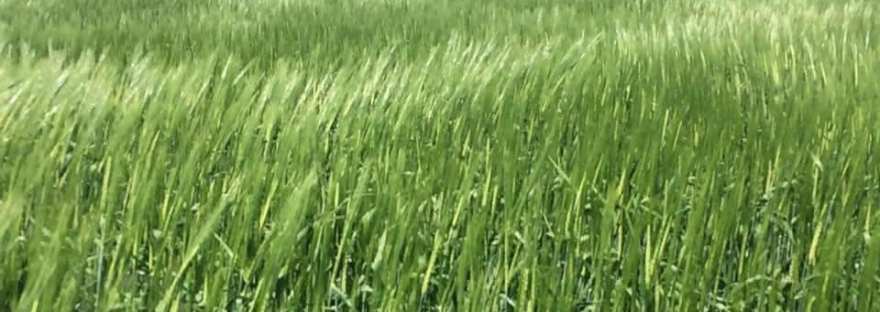
The whole of my grandparents’ generation on my mom’s side is gone now, but as I read the parable of the sower and the seed I recalled a sweet conversation between my grandpa, Norman Rudel, and his younger brother, my great-uncle Arlyn, whom everybody called Rudy. It was the weekend of my ordination, actually, 15 years ago now. They were talking over whisky Manhattans about one particular summer from their youth that yielded one of the biggest crops their family could remember. The durum wheat, in particular, had grown thick and strong that year, with full heads of grain that came as a reward for their good care of the soil, but also thanks to rain that came at exactly the right times and in exactly the right amounts. Rudy and my grandpa were remembering the work they did alongside their dad that weekend. They were up as early on Saturday and Sunday mornings as they always were, preparing equipment and grain storage bins for the harvest.
As they remembered it, the weather was perfect early that Sunday morning, but the forecasts for later that day were a little iffy. Rudy and my grandpa urged their dad to take a Sunday off from church so that they could get as much of the crop in as possible while the weather was in their favor. My great-grandparents were deeply faithful people, however, and the suggestion that they miss church was a non-starter. So, the family got cleaned up and headed into town to give thanks to the God of the harvest. And as they joined their community in worship, it began not only to rain, but to hail. Menacing, pounding, golf-ball-sized hail.
If you’ve never seen hail damage on a field of wheat, it’s something to behold. Stalks of grain that once stood tall and proud are battered to the ground in minutes, leaving the field looking like a wayward giant had stomped through it at random. The congregation full of farmers looked at each other warily across the pews as the hailstorm raged. They knew that their bumper crops were all but being destroyed as they sang and prayed together.
When worship was over, my great uncle Rudy remembered overhearing a conversation between his dad and another member of the congregation. “I just can’t believe it. You lost your crop because you came to church, Ed. I’m so sorry.”
My great-grandpa’s reply? “No, sir. We didn’t lose the crop because we came to church. We lost the crop because it hailed.”
Where I come from, it’s often said that farmers are eternal optimists. But I think there’s actually something much deeper at work in people like my great-grandpa, because optimism is tied to outcomes. Optimism implies an expectation that things will somehow unfold in a way that’s favorable. Certainly there’s some optimism – and maybe also a little stubbornness – involved in working the land, whether you’re a High Plains farmer or a backyard gardener or a tender of potted herbs on the windowsill. But optimism fades quickly when the outcome looks like hail smashing your family’s annual income in an instant, rather than the bumper crop that was right in front of your eyes just hours before. In that moment, hope needs to surface. A deep, resilient hope that has nothing to do with the outcome of the situation at hand, and everything to do with the character of God.
A sower went out to sow, Jesus says, and as he sowed, he threw some seeds on the path, where the birds came and ate them up. He threw other seeds on rocky ground, where they sprang up quickly, but didn’t last for lack of strong roots. Other seeds the sower threw amongst thorns, where the life was quickly choked out of them. And other seeds the sower threw on good soil that yielded abundant grain, as much as a hundredfold.
A sower went out to sow and just look at the way that sower handles her work. There’s no planning, no scheming of nice, neat rows, no evaluation of the soil and sunlight, no fences that are strategically placed to keep unwanted creatures away from the growing plants. No, the sower goes out to sow, and the sower flings the seeds everywhere. Everywhere! The sower does not wait for soil to be ready, or for the soil to look promising, or for the soil to have proved its ability in the previous harvest. The sower simply flings upon all the soils of land and life, even the ones that look the most grim. She sows the seeds of love and justice and possibility, of which there is always abundant supply. Some of the seeds grow. Some of them start growing and then wither away. Some of them immediately die. And yet the sower keeps on going, tossing seeds wherever she goes, no matter the result; no matter the outcome.
I can imagine my great-grandpa turning in his grave upon hearing about this kind of reckless approach to planting. I mean, who the heck would throw out seed so extravagantly, so haphazardly, so wastefully tossing it on soil that could never produce a harvest?
It turns out, God would.
In Matthew’s description of the sower we learn what God is like. God is like a sower who tosses seeds of love and justice and new life upon the whole earth, upon all of humanity, without discretion. This love of God is sprinkled everywhere. It lands on fields and meadows, thorns and rocks. It lands in back alleys and sidewalks, school playgrounds and parking lots. It lands on living rooms and grocery stores, jail cells and corporate office buildings. It lands on Black Lives Matter protests and law enforcement offices, COVID wings in the hospital and funeral homes. It lands on addiction recovery centers and church sanctuaries and downtown pubs and everywhere in between.
There is not a corner of this world where seeds of love and possibility are not scattered about by our gracious and generous God. Sometimes that love materializes. Sometimes it’s rejected. Sometimes it shows up in the most surprising of places, the way greenery shoots forth out of the cracks in a sidewalk. But here’s the gospel, here’s the point: the human response to love doesn’t change whether God is pouring love into the world, into each one of us, every single day. That’s just what the Sower does. That’s just what God does. All day long. All the world over.
This love of God is not a sentimental love. It is a deep, powerful, world-altering love. God’s love looks like the lowly being lifted up. It looks like the hungry feasting on every good thing. It looks like souls freed from the confines of sin and self-centeredness and fear and self-doubt. It looks like a table that grows exponentially as people of every race and nation stream toward it; a table overflowing with bread and wine and laughter in the gentle company of the faithful. It looks like restored relationships between God’s broken and beloved people – relationships characterized by justice and humility and a commitment to each other’s thriving. It looks like the unbreakable promise that we are worth loving, worth investing in, even when the soil of our hearts is too rocky to let that love move us; even when our faith feels as battered as my great-grandpa’s wheat fields that summer long ago.
Farmers where I come from are often called eternal optimists. But when the favorable outcomes of a plentiful harvest are beaten down in the span of a church service, optimism withers away like a plant with no root, bending in defeat like a hail-damaged stalk of grain. That’s when hope needs to surface. A deep, resilient hope that has nothing to do with the outcome of the situation at hand, and everything to do with the character of God.
Our whole human family is in the midst of a season of deep uncertainty, marked by pandemic and protest, anxiety and utter exhaustion. Even the most optimistic among us have had to reckon with how little control we actually have over the outcomes of our individual lives. But even now – especially now – God is still God, sowing the seeds of love and justice and the promise of new life as wildly, extravagantly, and recklessly as God has always done. May this enduring faithfulness of the Great Sower allow tender shoots of hope to keep springing up in the soil of our lives. And may that hope grow roots in us that are strong and deep, reaching beyond our attachment to expectations and outcomes and into the richness of God’s own eternally hopetimistic vision for the whole of this created world.
Amen.
I am so grateful for my dear friend and colleague, Pastor Sarah Rohde, and for her assistance with portions of this sermon.

 Heidi Torgerson