a sermon on Matthew 10:24-39
So, my sermon title for today is “Fearless Discipleship.” I’m guessing most of you don’t ever think about how sermon titles work, but in order for our colleagues to create the online bulletin each week without pulling it all together at the very last minute, the pastor who’s preaching has to submit a sermon title pretty early on. Pastor Ben & Pastor Leland might be more on top of this than I am, but I often end up submitting a sermon title based on just my first readings of the text, before I’ve even drafted out what the sermon’s actually going to say. Which means that I didn’t realize until I sat down to write this sermon how ironic the title would turn out to be. Because after a week of praying through this gospel text, I find myself feeling pretty afraid to preach the message God has placed on my heart.
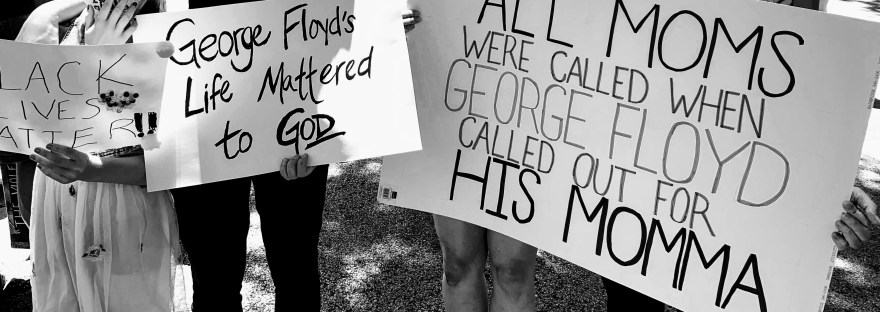
I didn’t choose this text today from Matthew’s gospel. It’s the assigned text from the Revised Common Lectionary, which is the cycle of Bible readings that mainline churches the world over use each week. This text chose us, and it’s a hard one. It’s a text about slaves and masters. It’s about truth-telling and terrifyingly bold proclamation. It’s about persecution and divided families. It’s about Jesus’ difficult words that he didn’t come to bring peace, but a sword. This text chose us on the weekend of Juneteenth, the day when we commemorate the final end of slavery in this country. And this text chose us in the continued unfolding of an uprising and an awakening around race in this country, the likes and scale of which we have not seen in a very long time. This text chose us because it is a word for our time, and God had some pretty clear things to say to me about how it should preach.
But as I sat down to write this sermon I remembered how the last sermon I preached, which was about our Trinitarian God of relationship, also talked a whole lot about race. And I remembered how two of my last three video messages to you touched on race, and about how 80 or so of us are going to be talking about race all summer as we study the book Waking Up White. And I remember acutely, every single day, that COVID and social distancing means we don’t know each other well yet; that we don’t yet have the kind of pastoral relationship that helps you feel confident in my deep love for you even when the Bible asks us to wrestle together with a word we might rather not hear. And suddenly I wanted to throw out that “Fearless Discipleship” sermon title and instead preach a feel-good message on the Psalm or something.
But then a trusted colleague gently reminded me that I’m a white pastor, serving a mostly white congregation in the whitest denomination in the country, and that my strong desire to back off this difficult text and preach a feel-good sermon is the very definition of the privilege that I carry in the world as a person who is white. It’s the privilege of getting to decide when we talk about these issues and when we’d rather just not; the privilege of getting to decide when we engage and when we just need a break; the privilege of thinking that preaching about issues of race in a time like this is a choice and not a gospel mandate. And I had to come to terms with the fact that I really wanted to invoke that privilege today. Because I mean, good grief, we’ve been talking about race for weeks now. And also we’re still in the middle of a pandemic, and we’re all tired and mostly at the end of our ropes. And also I am afraid. I’m afraid to bring up race again because I’m afraid of inadvertently become a preacher whose parishioners can no longer hear her.
But I’m even more afraid of becoming a preacher who isn’t faithful to the gospel. I’m even more afraid of becoming a preacher who is presented with a hard text and chooses to say, “Sorry, God; this is too much for us this week” instead of modeling for you the courage to wrestle with it.
So here we are.
The 10th chapter of Matthew is sometimes called Jesus’ “mission discourse.” It’s all about Jesus sending the 12 disciples into the world to proclaim God’s coming reign. And this sending? It’s no joke. Jesus sends those disciples out in complete vulnerability. They’re to take no pay, no extra clothes, no staff for protection, not even an extra pair of sandals. He grants them remarkable powers; powers that flow from God and allow them to heal people from every kind of suffering; to cast out the demonic forces that destroy people’s lives; to cleanse lepers and restore the outcast ones back into community; even to raise the dead.
But Jesus knows that this kind of faithful proclamation and practice of the gospel will put the disciples on a crash course with the powers of this world. He knows that the gospel is disclosive in nature; that it brings into the light the kinds of things that powers and principalities would rather keep hidden. “For nothing is covered up that will not be uncovered,” Jesus says, “and nothing secret that will not become known.” In order to bring hope and healing to those who are beaten down, vulnerable, discriminated against, and marginalized, the gospel’s saving power must also uncover and bring into the light the death-dealing kind of power that defies God. The kind of power that builds racial violence right into the systems of our life together. The kind of power that fills its lungs with the breath it chokes out of others. The kind of power that divides with lies and fuels itself with threats of force. The kind of power that does whatever it can, to take what it can, from anyone it can.
Jesus knows how the world works, and he knows what the disciples will encounter in their mission to proclaim God’s reign through word and deed. And so he pulls no punches in telling them what they can expect as they shout God’s power from the housetops; God’s power which stands in direct opposition to those who are invested in the death-dealing powers I just described. It’s so intense that the lectionary actually skips over some of the harshest parts, perhaps rightly assuming it might be a little too much for us to handle. Jesus tells the twelve that, because of their practice of the gospel, they’ll be handed over to powerful religious authorities and publicly beaten. He tells them that they’ll be dragged before governors and kings on account of their ministry. He tells them that their families will rise up against them – that members of the same household will betray each other even to the point of death. He tells them that they’ll be subject to persecution and hatred by pretty much everyone as they carry out God’s mission. It’s astonishing to me that the disciples said “yes” to being sent out, because in the going they risked literally everything.
But friends, it’s not just those first twelve that Jesus calls into a risky life of discipleship. He’s also called you; and he’s called me too. I trust that you have experienced the deep comfort and peace that comes through following Jesus. But a life of discipleship is not only a source of comfort and peace. It can also be a source of deep conviction and challenge. Today’s gospel text is more about the latter, even if I kind of wish it wasn’t. It reminds us that following Jesus involves helping to uncover the things that abusive powers want to keep hidden. It involves holding up the gospel like a mirror for ourselves and for the world so that it can reflect back to us the truth of who we are.
And facing that truth can be difficult. It can be downright terrifying. Because this kind of uncovering, this kind of truth-telling, will require us to face some things we might not want to face. It will ask us to do some deep, internal work of the sort that makes us feel tired just thinking about it. It will ask us to re-examine some of our most deeply-held beliefs and assumptions. It might result in the end of relationships we once held dear. It might call us to speak out in ways that are new for us and make us pretty uncomfortable. And all of that, frankly, is more than a little scary. But it’s a whole lot harder for Jesus’ saving power to heal what is kept hidden and so in spite of the personal and public risks, Jesus keeps calling us together and sending us out…calling us together and sending us out…to join in the holy and difficult work of uncovering all that hinders God’s loving and freeing purpose for the world.
I think Jesus knew that fear can be paralyzing. And I think he knew that a paralyzed people are ineffective messengers of the gospel of life. So even as he is telling the disciples – and us – about how a life in service to God’s mission will sometimes be difficult, he also tells us not to be afraid. In fact, he says it three times in just these few verses we read today. Have no fear of them. Do not fear. Do not be afraid.
But how do we live into Jesus’ call to fearless discipleship when everything around us and inside us feels so chaotic and hard to grab hold of? It might be different for you, but the thing that helps me cast aside fear and engage the work of the gospel is the reminder of just how much God adores us; of just how valuable we are in the eyes of God. Not even a sparrow can fall from the sky without God taking notice, and if God pays that much attention to little bitty sparrows, how much more does God pay attention to us…to our fears and our hopes and our needs and our dreams. The Bible tells us that our lives matter so deeply to God that even the hairs of our heads are all counted. I love that image so much. It makes me think of what it felt like as a child when a grownup who loved me would come into my bedroom at night before they went to sleep, just to lay a gentle hand on my head one more time before morning.
That’s the way that God loves you, dear ones.
May you experience that deep, deep love in your bones this week. May you feel the fiercely protective, gentle hand of God upon your blessed heads as we move through these days. And may it strengthen and embolden you with a spirit of fearlessness as you carry the gospel of Jesus into the world. Amen.

 Heidi Torgerson