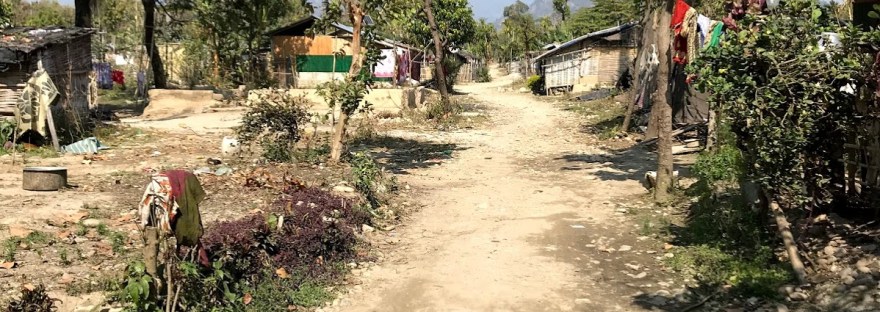
Hope Marks the Road

a sermon on luke 24:13-35

I had only been in Mexico a handful of weeks on the day that I got hopelessly lost on the streets of Mexico City. I had moved there as a 27-year-old first call pastor, serving as a missionary on behalf of the ELCA. I remember feeling a comforting sense of growing confidence as I’d set out for the market that particular morning. My Spanish language skills were deepening, I knew the walk down Revolucion and past the Barranca del Muerto Metro station, which would bring me to the entrance door I wanted, and I’d been to this market enough times by now that a few of the puesteros – the vendors – recognized me and called out greetings as I walked past.

I snaked my way ever deeper into the labyrinth of the market, buying some tomatoes, some jalapenos, some eggs, and a few strawberries along the way. I was feeling SO confident by the end of my little excursion that I decided to leave the market through the back rather than the front entrance to which I was accustomed. Well, that back exit spit me out not onto a main road, but into the outdoor extension of the market. Vendors lined the narrow winding streets, selling pretty much everything you could imagine – pirated DVDs, single cigarettes out of open packs, secondhand clothing, plastic food storage containers, you name it. It only took me a few blocks before I realized I had no idea where I was anymore. So, I started to ask for directions.

Now, my Spanish had gotten way better than when I’d first landed in Mexico, but there were a number of things happening here that were decidedly not in the favor of this lost gringa. First, the street Spanish being spoken around me was peppered with all sorts of idioms and slang that I didn’t yet know how to use in my daily life. Second, lots of the street names in Mexico City come not from Spanish, but from the indigenous language of Nahuat’l, and let’s be real. My ear was not yet attuned to just catching words like “Nezahualcoytl” on the fly. So, I took a deep breath and resigned myself to the probability that I was going to be out here for awhile, and to the certainty that I was going to need to ask a new person for help approximately every block and a half.

I’d been at this game for probably 20 minutes when I came across an elderly woman, sitting on a blanket with small candies and gum spread out in front of her for sale. Her long, white hair was pulled back into a thin braid, and the thick callouses on her bare feet suggested to me that she probably didn’t own shoes. I must have looked as bewildered as I felt in that moment because she called to me from her blanket.

When I told her I was lost and gave her the general direction of where I was trying to go, she stood up carefully and, in a beautifully intimate gesture, took my face in her hands as she said to me, “Ay, mi vida, mi corazon, mi amor, yo te enseno el camino.” Ay, my life, my heart, my love, I’ll show you the way. And she did. This poor, elderly Mexican woman – whose name I’m embarrassed to say I didn’t even have the presence of mind to ask for back then – showed me all the way home that day. But she also showed me so much more. In a moment when I was feeling particularly vulnerable, she showed me the face of Jesus.

It’s amazing, isn’t it…the simple but also life-changing things that can happen to us on the road as we’re making our way through this life? Cleopas and the other disciple had some first-hand experience with the exact same kind of thing back in the day, on that 7-mile road between Jerusalem and the village of Emmaus. Things had gotten pretty dangerous in Jerusalem, especially for the followers of Jesus. Jesus, the disciples’ beloved friend and leader, the one whom they had hoped would finally liberate their people, had just been publicly executed by the Roman government. Jesus was dead, and all of their hopes for a new kind of life…a new kind of world order, even…had died along with him.

Cleopas and his friend are re-hashing all of these things as they walk the road together until a stranger comes alongside them, asking what they’re talking about. The disciples are understandably surprised that this stranger seems so clueless. Like, this thing that’s just happened in Jerusalem is trending on every social media platform, and it’s the leading headline for every news outlet, but whatever. They decide to bring the stranger up to speed.

They tell him about Jesus, a prophet who was mighty in word and deed, who had been handed over to the authorities and condemned to death. They tell him about how, because of Jesus, the people had begun to feel hope for the first time in generations. And they tell him about the women in their group, who asserted that the tomb where Jesus’ body had been laid was empty, but how none of the men had actually seen Jesus. The stranger doesn’t even need to ask how Cleopas and his friend are feeling in the wake of all these things because it’s written all over their faces. They are sad. Anguished. Heartbroken. They are most certainly also burdened by the weight of carrying all these feelings, and anxious about the uncertain future that now lies before them. Whew. Can you relate?

Before long the stranger begins to speak, opening the scriptures to the disciples starting with Moses – the great liberator of God’s people who led them out of slavery in Egypt – and continuing with the prophets, who throughout the Old Testament were consistently speaking truth to power, calling out the wealthy and elite and the rulemakers of the day for the extravagance of their lifestyles…lifestyles which served to, as the prophet Isaiah puts it, grind the faces of the poor into the dust.

It’s no accident that the stranger chooses Moses and the prophets as he talks with the disciples. It’s like the stranger is saying, “If this Jesus was who you say he was – a prophet mighty in deed who came to usher in a whole new world – how could he have met any other fate than what all the prophets faced…to lose his life at the hands of those who felt threatened by him?” Because then just as now, there were those who felt threatened…by the expansiveness of Jesus’ welcoming arms…the stubborn insistence of his love for all who were hurting and excluded…the life-altering nature of the hope that his ministry gave to the people.

As the disciples listen to the stranger something starts to move within them. When evening draws near they insist that the stranger stay with them. And then they do what we, too, do as a church community every week, and what we’ll keep doing online while we’re apart. They gather around a table. They share a meal. And in the breaking of the bread the disciples recognize the truth – that this one in their midst has never actually been a stranger…

As soon as they recognize Jesus he vanishes from their sight, but something profound has happened. “Were not our hearts burning within us as he talked with us on that road?” the disciples reflect. And immediately, they know what they have to do. Nothing has changed in Jerusalem. It’s the same chaotic, scary, and uncertain place it was when they left. Their future is no less clear to them. But somehow, the disciples have been so radically changed by their encounter with the crucified and risen Christ that they get back on that road, returning to the place they’d just left, filled anew with hope, to re-engage in the work of helping God’s reign break forth in the world.

Church, it’s no secret that we are living in extraordinary times. Our circumstances are obviously different than those of the disciples, but the road we are walking is similarly difficult. The stay-at-home order in Illinois has just been extended through May 31. We have no idea what this continued pandemic and the gradual reopening of our public spaces will mean for us, for our families, for our livelihoods, or for the church. The road ahead of us is as bewildering as the winding back roads of that Mexico City market that swallowed me up all those years ago. And like the disciples on the road to Emmaus, grief and fear and confusion can keep our eyes from seeing any hope along the way…can keep us from recognizing the face of Jesus when he shows up.

But it doesn’t matter. Truly, friends, it doesn’t matter. Because here’s the thing. It was always Jesus. Even when the disciples’ ability to recognize him was clouded by the stuff of their own difficult lives, it was always Jesus. The presence of Jesus doesn’t depend on our ability recognize him. Just like the presence of Jesus doesn’t depend on our feelings. The presence of Jesus doesn’t depend on our ability to muster up some certain kind of positivity when things seem bleak, or some false sense of hope when we feel like we’re hanging by a thread. In fact the presence of Jesus doesn’t depend on us at ALL. The presence of Jesus just IS…sure, and certain, and true, today and always. No matter what.

These are difficult days, friends, but Hope marks the road. Embodied in Jesus, Hope accompanies every step we take as we journey through life. Even when we can’t recognize it or feel it Jesus is there, showing us the way when we feel most lost. And that seems just about right. Because at the end of the day, in the company of Jesus, aren’t we all just walking each other home?
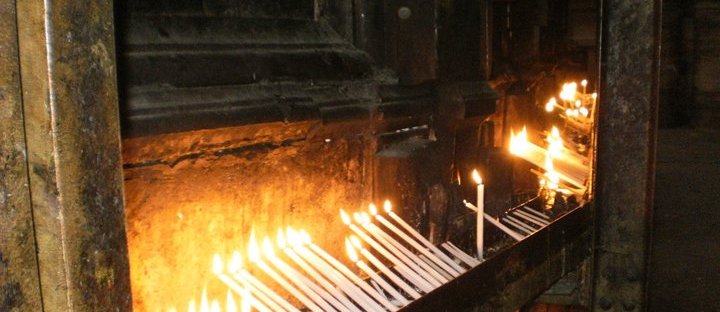

Quiet Enough to Hear

a sermon for easter sundaymatthew 28:1-10

One of my closet colleagues in the years I lived in Mexico pinned a powerful quote from Indian novelist Arundhati Roy to the wall of our office. It’s since become imprinted on my heart. “Another world is not only possible,” Roy writes, “she is on her way. On a quiet day, I can hear her breathing.”

Another world is not only possible, she is on her way. On a quiet day, I can hear her breathing.

Church, Christians are gathered in spirit around the entire globe today to claim against all odds this defining event of our faith. Christ is risen, and nothing will ever be the same. I know that Grace is accustomed to celebrating the resurrection with the beautiful, well-done, all-out liturgy and music that is so core to our congregation’s identity. My heart aches along with yours that our celebrations are so much quieter and so much simpler today. There’s no brass. There are no choirs. There are no banners, and no collective shouts of “Alleluia!” There are no kids shrieking with joy around the playground area as they hunt for Easter eggs. There’s no buzz of energy in the fellowship hall over continental breakfast. It’s hard. It hurts. And to be honest, I kind of hate it. I kind of hate that our first Easter together is unfolding in this way.

But then I remind myself of the thing I said to you a couple of weeks ago when I first started as your pastor. (If you didn’t know it already, sometimes pastors say the things that we ourselves most need to hear!) The church has never been about the buildings in which we gather. And while God loves our faithful offerings of beautiful worship, God is still God without them. So although there’s perhaps a certain sadness tingeing our celebrations today, I also wonder if maybe, just maybe, Easter might be quiet enough this year for us to hear afresh the breathing of a new world that Jesus’ resurrection ushered in, and keeps ushering in, and will keep ushering in.

Because that first Easter didn’t start with trumpets and fanfare. It started with one man, awaking by himself in a dark, stone cave, peeling off the linen cloths that Joseph of Arimithea had used to wrap his lifeless body just a few days earlier. It started with Mary Magdalene and the other Mary, sitting outside the tomb at first light in the damp cold, the dark and the chill no doubt matching the feelings they carried within them. And though Matthew’s gospel doesn’t tell us exactly where the disciples were in the days after Jesus’ crucifixion, we can take a hint from John’s telling of the story, which finds the disciples quarantined together in a locked room, fearful and uncertain.

And into the quiet, into the grief, into the fear and uncertainty, the unmistakable power of God breaks in. Of the four gospel writers, Matthew has a special penchant for drama and so he tells us of a sudden earthquake, of an angel that looked like lightning, with clothing as white as snow, and of guards who shook and then fell to the ground out of fear, their bodies suddenly as still as corpses. These things sound improbable at best to our modern ears, but they are Matthew’s way of ensuring that the first hearers of this story would know, beyond a shadow of a doubt, that what is happening here is of God. First century people well-versed in the Old Testament scriptures knew that the presence of God was signaled by natural phenomena. Wind, lightning, thunder, hail, fire, and earthquakes all carried the power and the often-terrifying mystery of God’s presence into the ancient stories of the faithful.

And this being who looks like lightning? We trust that he is of God because we’ve heard some of these phrases before, in the book of Daniel, where God is described as having clothing “as white as snow,” and where the man who appeared to Daniel had “a face like lightning.”  The Hebrew tradition taught that anyone who saw the face of God could die and so the guards’ response of paralyzing fear before this angel of the Lord seems the only sensible one. The women, however, are specifically invited into God’s presence when the angel speaks to them directly – “Do not be afraid,” he says. “I know you are looking for Jesus who was crucified. He is not here, but has been raised as he said.”

Shhh. Quiet. Can you hear her breathing?

Can you hear the wind of the Spirit’s breath filling Jesus’ lungs as he awakes from death?

Can you hear the wind of the Spirit’s breath on the lips of the women as they run to tell the disciples what they’ve seen?

Can you hear them catching their breath as they run smack into the risen Christ along the way?

And can you hear the wind of the Spirit’s breath on Jesus’ own words to his beloved friends – “do not be afraid”?

Can you hear the wind of the Spirit’s breath whispering now to a beleaguered creation…and to your own hearts…that Christ is risen, and nothing will ever be the same?

Church, can you hear a new world breathing?

It’s okay if you can’t. It’s hard for me right now, too. It’s hard to hear that new world breathing when the current one is smack in the middle of what feels like a very, very extended Good Friday. It’s been hard for me to hear the promise of new life when each day brings with it new statistics of death, and even harder still when the numbers reported on the news increasingly include the names of people we know, and sometimes even people we love. It’s hard to hear the breath of new life when the sounds of worry or stress or sadness or frustration or loneliness or exhaustion are rattling around in our brains in the low-level kind of way that makes us think it’s not that bad, I’m doing okay. Except that even these low-level rattling feelings still interrupt our sleep or our concentration or our relationships with the people we love.

It’s okay if you can’t hear a new world breathing, because here’s the thing, friends. Other people can. Today, right here, right now, others can.

And that’s why God doesn’t leave us hanging out there on our own, but instead calls us into communities of faith…communities just like Grace.

That’s why the Bible reminds us that we are part of the BODY of Christ and aren’t just lone rangers out there having to make faith appear out of the inadequately thin air of our individual lives.

That’s why, when we come around God’s table for communion, which we’ll do together in just a few minutes, we confess that Jesus is right there with us, along with all of the saints in faith who have ever lived before us.

Thanks be to God for this call into community, because if these moments of collective vulnerability we’re experiencing the world over show us anything right now, it’s the truth that we simply can’t MAKE it on our own.

That’s always true, and it’s especially true right now. We want to say “yes!” to the new world breaking forth with Jesus’ resurrection, but sometimes we need to lean on our community to believe for us when we’re having a hard time, and to trust that the strength of that community is enough to hold us when we’re struggling. Because truly, this incredible story of a God who brings live things out of dead things would be incomplete if even one of us was missing. We all play different roles in that story, and we move between roles depending on where we are in our lives on any given day.

Sometimes we’re like the guards at the tomb, paralyzed with fear in the face of all that’s unfolding before us.

Sometimes we’re like the disciples, imperfectly stumbling our way through a life with Jesus and then hiding away in shock and in fear when the risks of being associated with him become too great to bear.

Sometimes we’re like Mary Magdalene and the other Mary, sitting grief-stricken outside the tomb of the one who loved us beyond all imagining…the one who loved even the parts of us that other people laughed at, or that we felt ashamed of, or that we couldn’t love in ourselves…until the blazing presence of God hits us like a ton of bricks and turns us into witnesses, running toward our friends with a confounding mixture of fear and joy.

And sometimes we’re like the angel, absolutely radiant with God’s power as we confidently – even defiantly – proclaim a message that comes from God’s very mouth – that love is stronger than death. That goodness is stronger than evil. That in Jesus, life is stubborn…powerful enough to make her way in the world, breath by breath, against all odds.  

Christ is risen, Beloved of God. A new world is on her way. And indeed, she is already here. Listen to her breathing. Praise be to the God of Life.

No Glory, Laud, or Honor

a sermon for palm/passion sunday

There’s sort of an unwritten rule that good preachers take care to not share too much in the way of personal stories when it comes to sermons. I think this is generally a wise rule to keep in mind. But it seems like we’re in the midst of a time when most of the rules about life and ministry just don’t apply, so I decided I would go ahead and break any that might be remaining and just tell you the God-honest, vulnerable truth about where I’m at right now.

The truth is that I think I’ve cried more this week than I’ve cried in years. I mean, the tears have just been coming out all over the place. I have my family’s permission to tell you that my uncle Paul has been in very critical condition in a North Dakota hospital. He was intubated just over a week ago with what was the second confirmed case of COVID-19 in that state. He hadn’t been around anyone at all who had been sick, but the illness brought him within inches of death, and my aunt wasn’t able to be with him in the hospital. So many tears. And then, after a number of days when it wasn’t at all clear whether he was going to survive this illness, he miraculously turned a corner. And I do mean miraculously. He’s not yet out of the woods, but his medical team was able to lift him out of his coma, and he was able to say hello to my aunt on the phone just a couple of days ago. Again, so many tears.

On Tuesday, my first official day as your new pastor at Grace, I had a Zoom meeting with a small handful of the staff. As the faces of those four other colleagues showed up on the screen, I started to cry. Like, I cried an embarrassingly unprofessional amount of tears, right there in front of God and everybody as that meeting got started. I’ve grown accustomed to the overwhelming sense of joy I’ve felt in stepping into this call as your pastor, but I was wholly unprepared for the grief that hit me like a sucker punch when I saw the faces of these people I already love but with whom I cannot gather. I feel exactly the same way about each of you. I already love you, and I’ve never even seen you. So when these flowers arrived at my door on Saturday morning, together with a beautiful note from the congregation, welcoming me as your pastor, guess what happened? Yep. So. Many. Tears.

On Wednesday, a calendar reminder popped up on my phone. It said, simply, “Kate Rehearsal.” Our 7-year-old has discovered a passion and a gift for musical theater, and we’d signed her up for her first-ever musical with a really amazing community children’s theater group. Her first rehearsal was to have been this week. Somehow that calendar reminder also triggered So. Many. Tears. Tears for Kate’s loss, and tears for the many, many little losses that your families are also experiencing, which don’t actually feel so little at all.

I’ve cried more this week than I’ve cried in years. And I think, at the root of it, is the sense of powerlessness I feel in the hands of this global pandemic. I wonder if you might feel the same way. There is illness, and there is more to come. There is grief, and there is more to come. There is overwhelming loneliness and isolation. There is also, for some of us, unrelenting togetherness – houses filled with the people we love most in the world who we can also just BARELY stand to be around sometimes right now. It’s just all so much, and we’re powerless before it. Here we are, God’s people literally the whole world over, standing empty-handed and defenseless before a virus that has upended every one of our lives in the blink of an eye.

It strikes me that we’re not so unlike the crowds of people who had gathered to greet Jesus riding into Jerusalem all those years ago. They are similarly empty-handed; similarly defenseless before the forces arrayed against them. But rather than staring down a virus that’s upended their lives, they’re looking square into the temple priests’ exclusionary religious rules…the Roman officials’ oppressive laws and armies…the centurion soldiers’ threatening spears and armor. Their branches and their garments are simply no match for the powers that have upended their lives, and so the lay them on the ground and cry out to the man riding into the edge of town, whose reputation precedes him. “Hosanna! Hosanna!” they shout as a dusty, smelly donkey carries Jesus through the crowds.

Hosanna. We’re used to hearing it as a joyful shout of praise, but the Hebrew root of the word actually means “save us.” “Save us!” the crowds cry out. And on their cries is the God-honest, vulnerable truth of where the people were at on the day Jesus rides into town. Hosanna! Save us! Save us from the religious rule-makers who say we’re not worthy to enter the holy places. Save us from the crushing weight of poverty. Save us from the abuses of the empire that rules over us. Save us from our apathy. Save us from our hopelessness.

The crowd shouted “Hosanna! Save us!” and I imagine that the people in that crowd had expectations for what that salvation would look like. It would look like all the other things that seem to win in the world, except it’d be bigger, and stronger, and more effective, and more complete, because God had sent this one named Jesus. And maybe this man named Jesus would finally be enough to conquer the powerful ones who had kept the people crushed under their thumbs.

And here we are today, standing with siblings across the entire world, shouting the same cries of “Hosanna! Save us!” as our own need for salvation becomes increasingly clear to us. Save us from rising rates of infection and death. Save us from economic devastation. Save us from the loneliness and isolation, and also from the too-much-togetherness. Save us from our overwhelming anxiety. Save us from the feeling that the pressures and pains that were present in our lives before the coronavirus somehow no longer matter to anyone. Save us, Lord.

Church, here is what I know. Jesus hears the cries of “Hosanna!”. He heard the cries of the people in the crowd on that first Palm Sunday, and he hears them from us today, too. And as we enter into this Holy Week, we will witness, again and again, the salvation that Jesus brings. Except that as much as human hearts throughout history have yearned for the salvation of Jesus to come in the form of conquering might or permanent deliverance from human suffering, that’s not what we’re going to get. We rightly heap glory, laud, & honor on Jesus as he comes riding into town, but he’s not going to pick up that mantle. He’s not going to defeat the powers that be. He’s going to surrender to them. He’s not going to wipe away suffering from our human experience. He’s going to go to the heart of it. And in so doing, he will carry with him the promise that, from now on, God will be intimately, profoundly present with us whenever we face our own seasons of suffering and death.

Jesus will journey to the cross and join himself to our suffering because, as upside-down and backwards as it seems, this is what the salvation of our God looks like. It looks like a love so deep that it willingly takes on the most painful, wrecked pieces of our human story…holding onto us along with our pain until it is all transformed…until it is returned to us as new life.

So stay close to one another, beloved of God, as we walk alongside Jesus through this holiest of weeks in the most difficult of times. Watch what happens to our cries of Hosanna! in the hands of a God who is quick to save. Amen.